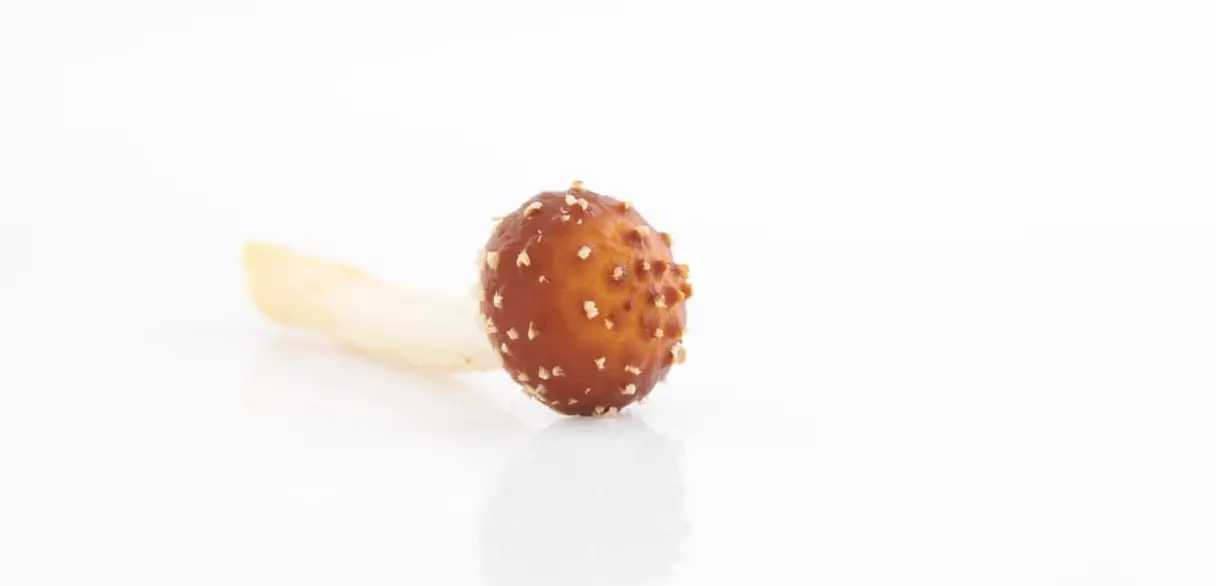


Latin: Agaricus blazei Murill
Czech: Almond mushroom
Chinese: Ji Song Rong
Japanese: Himemtsutake
Agaricus blazei murrill (Agaricus brasiliensis, Himematsutake, Ji Song Rong, Almond mushroom, sun mushroom) is a mushroom belonging to the Agariceae family. It has a scaly, brown-gold (hence the English name sun mushroom) cap, which has a diameter of between 2 and 12 centimetres. In young mushrooms, it is significantly convex, but as the mushroom grows, it flattens and frays at the edges. The cap sits on a light-coloured stalk, which can be 10 cm high. Agaricus is excellent in terms of taste, having a wonderful sweet flavour. It grows in the sun and not in the shade like most mushrooms. Hence its English name, sun mushroom.
The mushroom originates from South America, and not only that, it is found in a small area of Sao Paulo, around the village of Piedade. Now, however, it is grown all over the world. It is easily cultivated even commercially. Agaricus has been used by local inhabitants since time immemorial not only as a tasty food, but mainly as a “medicine”. The Czech name is based on the character of the mushroom, i.e., it smells of almonds.
Agaricus was not entered into herbariums until 1945, thanks to the mycologist W. A. Murill. However, the mushroom was not publicly introduced until 1960, when the Japanese scientist T. Furomoto began to study it in the laboratory. He also managed to prove many of the effects of this mushroom.
It is interesting that Agaricus was entered into the botanical system in 1967, for which the Belgian botanist Heinemann was responsible.
Since the 1960s, Agaricus has enjoyed great interest, which is certainly not waning. New effects of this unique mushroom are still being discovered. Agaricus was allegedly also used by the American President Ronald Reagan, who suffered from skin cancer.
Nature (Si Qi): warm
Taste (Wu Wei): sweet, slightly pungent
Tropism (Gui Jing): spleen, stomach, intestines
1, Strengthens the immune system
2, Use in cancers
3, Coughs
4, Skin problems
5, Allergic and autoimmune reactions
6, Support of peristalsis and digestion
7, Metabolic problems
8, Neuropathy
9, Hepatoprotective effects
10, Supports bones
11, Spasms
12, Arthrosis
13, Anti-inflammatory effects
Less common uses of Agaricus:
a, Mushrooms in the form of extracts (recommended form of use)
If you are taking mushrooms in the form of 30% extracts, I recommend:
Preventive use
For milder health problems
For more serious health problems
b, Mushrooms in tincture
c, Mushrooms in the form of powder (powder, biomass)
d, Dried mushrooms
The composition of the mushroom also predetermines its effects. In the following text, we will look at the most essential components of Agaricus
Sugars overall make up the largest share of the dry matter. In Agaricus, there are simple sugars, monosaccharides, e.g., mannitol and trehalose, but mainly complex sugars, i.e., polysaccharides. Polysaccharides also include beta-glucans, which have immunostimulatory, antioxidant and anti-tumour effects. Agaricus is rich mainly in glucans, which have a basic skeleton (1–6)-beta and (1–3)-beta, (1–4) D with further branching. It is the composition of the polysaccharide and the type and location of the branching that largely determines its effect. Other polysaccharides that are in Agaricus are classified as crude fibre. This is not absorbed into the organism and serves as a source of energy for symbiotic intestinal bacteria.
An integral part of Agaricus are also amino acids, the building blocks of proteins. It contains essential amino acids, which the body cannot produce itself and obtains only from food, as well as non-essential ones, which the organism can produce.
In the attached table, it can be seen that the highest concentration per g of dry matter is arginine, followed by glycine, glutamic acid, proline, alanine, histidine, threonine... The tested sample did not contain cysteine.
Proteins are represented in Agaricus by, for example, enzymes. These are mainly enzymes that break down animal matter so that the mushroom can draw nutrients from it, i.e., lactases, glucanases and enzymes breaking down lignin.
Cho SM, Jang KY, Park HJ, Park JS. Analysis of the Chemical Constituents of Agaricus brasiliensis. Mycobiology. 2008;36(1):50-54. doi:10.4489/MYCO.2008.36.1.050
In Agaricus, it is also possible to find fatty acids. A larger share is made up of unsaturated acids (healthier), there are fewer saturated ones. From the table, it is evident that there is the most linoleic acid (unsaturated) in Agaricus, then palmitic (saturated). It further contains pentadecylic, stearic, behenic, oleic, linolenic acid... (the first number after the name of the acid is the “length” of the acid, the number after the colon indicates how many double bonds are in the acid, i.e., how (un)saturated it is.
Agaricus contains many other compounds that are very significant.
Important are, for example, organic acids, the content of which per 100 grams of dry matter is in the table. There is the most fumaric acid, followed by acetic, lactic, malic, pyroglutamic, formic,
citric, oxalic. Among other things, they give the mushroom its taste and smell.
Phenolic compounds have a great antioxidant, antimicrobial and anti-tumour effect, e.g.
Flavonoids are also strong antioxidants:
Terpenoids also have anti-tumour, antimicrobial effects; these are represented in Agaricus by, for example, blazeispirols A, B, C, E and F. In Agaricus, there are also vitamins, mainly vitamin D2, B-group vitamins (B1 thiamine, B2 riboflavin, B6 pyridoxine), biotin, folic acid, vitamin E. There is also no shortage of minerals and trace elements, e.g., potassium, phosphorus, magnesium, calcium, sodium, iron, zinc, copper, manganese... see the table below.
The effects of Agaricus are so significant that a preparation has been developed that is standardised and undergoes both animal studies and clinical studies. We are talking about Andosan. The preparation is composed of 82% Agaricus, 15% Hericium and 3% Maitake. It had a positive effect in patients with chronic intestinal inflammation.
Agaricus has the potential to support our health. We will discuss some effects more deeply in the following lines.
da Silva Campelo M, Neto JFC, et al. Polysaccharides and extracts from Agaricus brasiliensis Murill - A comprehensive review. Int J Biol Macromol. 2021 Jul 31;183:1697-1714. doi: 10.1016/j.ijbiomac.2021.05.112.
da Silva de Souza AC, Correa VG, et al. Agaricus blazei Bioactive Compounds and their Effects on Human Health: Benefits and Controversies. Curr Pharm Des. 2017;23(19):2807-2834. doi: 10.2174/1381612823666170119093719.
The proper functioning of the immune system is indispensable for our life. The immune system protects us from danger, whether it comes from the outside (e.g., infectious pathogens) or from the inside (tumour cells).
Agaricus, or the components contained in it, stimulates the immune system, immune cells. This effect was confirmed directly on immune system cells that were exposed to the action of Agaricus. In the case of macrophages, i.e., a type of immune cell belonging to innate immunity that can engulf and destroy foreign material (phagocytose) and stimulate other immune cells, there is an increase in the production of cytokines that strengthen the immune response, e.g., IL-1, IL-2, IL-6, TNF alpha or interferon gamma and growth factors, thanks to Agaricus. It also strengthens phagocytosis; if bacteria are phagocytosed, the ability of macrophages to kill them after engulfment is also increased. The stimulating influence of Agaricus was also confirmed in NK cells; these are natural killers that destroy cells attacked by viruses or tumour cells. The activity of T and B lymphocytes is also strengthened, and thus also the production of antibodies, including mucosal IgA.
In one clinical study, the authors administered Agaricus to 31 volunteers and monitored what effect it would have on NK cells. Although Agaricus did not increase the numbers of NK cells in this study, it significantly increased their activity.
Now we will look at cases where it is necessary to reduce the activity of the immune system. The immune system can react excessively to infections, thereby damaging the organism; it can attack harmless proteins (allergens), and even its own proteins (autoimmunity). Agaricus itself, or Andosan, has been used in many studies on animals and volunteers. Testing took place mainly in patients with chronic intestinal inflammation, i.e., with Crohn's disease or ulcerative colitis. Patients who received Agaricus/Andosan had fewer symptoms of the disease, the values of inflammatory cytokines such as IL-2, IL-6, TNF alpha decreased. A positive effect was also proven in samples of the intestine; the mucosa was less inflamed. Patients reported that they felt relieved thanks to Agaricus, they were more active, they did not have as many intestinal difficulties.
In mice, it was possible to prove that it suppresses the immune system and prevents the development of sepsis, which often ends in death. The mice therefore survived the procedure that triggered the sepsis.
Agaricus suppresses the increased activity of the immune system even in the case of allergies. Allergy is associated with allergic damaging inflammation. It is typical for allergic inflammation that there is increased activity of Th2 lymphocytes, eosinophils and mast cells; there is also increased production of IgE antibodies. In studies, Agaricus reduced the numbers of Th2 lymphocytes and also the production of IgE.
Wang P, Li XT, Sun L, Shen L. Anti-Inflammatory Activity of Water-Soluble Polysaccharide of Agaricus blazei Murill on Ovariectomized Osteopenic Rats. Evid Based Complement Alternat Med. 2013;2013:164817.
Nakajima A, Ishida T, Koga M, Takeuchi T, Mazda O, Takeuchi M. Effect of hot water extract from Agaricus blazei Murill on antibody-producing cells in mice. Int Immunopharmacol. 2002;2(8):1205-11.
Førland DT, Johnson E, Tryggestad AM, Lyberg T, Hetland G. An extract based on the medicinal mushroom Agaricus blazei Murill stimulates monocyte-derived dendritic cells to cytokine and chemokine production in vitro. Cytokine. 2010;49(3):245-50.
Ni WY, Wu MF, Liao NC, Yeh MY, Lu HF, Hsueh SC, Liu JY, Huang YP, Chang CH, Chung JG. Extract of medicinal mushroom Agaricus blazei Murill enhances the non-specific and adaptive immune activities in BALB/c mice. In Vivo. 2013 Nov-Dec;27(6):779-86.
Cui L, Sun Y, Xu H, Xu H, Cong H, Liu J. A polysaccharide isolated from Agaricus blazei Murill (ABP-AW1) as a potential Th1 immunity-stimulating adjuvant. Oncol Lett. 2013 Oct;6(4):1039-1044.
Liu Y, Fukuwatari Y, Okumura K, et al. Immunomodulating Activity of Agaricus brasiliensis KA21 in Mice and in Human Volunteers. Evid Based Complement Alternat Med. 2008;5(2):205-219. doi:10.1093/ecam/nem016
Padilha MM, Avila AA, Sousa PJ, Cardoso LG, Perazzo FF, Carvalho JC. Anti-inflammatory activity of aqueous and alkaline extracts from mushrooms (Agaricus blazei Murill). J Med Food. 2009;12(2):359-64.
Navegantes-Lima KC, Monteiro VVS, de França Gaspar SL, de Brito Oliveira AL, de Oliveira JP, Reis JF, de Souza Gomes R, Rodrigues CA, Stutz H, Sovrani V, Peres A, Romão PRT, Monteiro MC. Agaricus brasiliensis Mushroom Protects Against Sepsis by Alleviating Oxidative and Inflammatory Response. Front Immunol. 2020 Jul 1;11:1238. doi: 10.3389/fimmu.2020.01238.
Ellertsen LK, Hetland G. An extract of the medicinal mushroom Agaricus blazei Murill can protect against allergy. Clin Mol Allergy. 2009 May 5;7:6.
Førland DT, Johnson E, Saetre L, Lyberg T, Lygren I, Hetland G. Effect of an extract based on the medicinal mushroom Agaricus blazei Murill on expression of cytokines and calprotectin in patients with ulcerative colitis and Crohn's disease. Scand J Immunol. 2011 Jan;73(1):66-75.
Kawamura M, Kasai H, He L, Deng X, Yamashita A,Terunuma H, et al. Antithetical effects of hemicellulase-treated Agaricus blazei on the maturation of murine bone-marrow-derived dendritic cells. Immunology 2005;114:397–409.
Therkelsen SP, Hetland G, Lyberg T, Lygren I, Johnson E (2016) Effect of the Medicinal Agaricus blazei Murill-Based Mushroom Extract, AndoSanTM, on Symptoms, Fatigue and Quality of Life in Patients with Crohn’s Disease in a Randomized Single-Blinded Placebo Controlled Study. PLoS ONE 11(7): e0159288.
Tumour diseases are increasingly widespread worldwide. This is due to the increasing age of the population and also exposure to risk factors, e.g., pollutants in water, air. An incorrect lifestyle, e.g., smoking, increased intake of fats, sugars, lack of exercise and fibre, also takes its toll.
Many natural components have the potential to kill tumour cells. The same is true for Hericium. Anti-tumour effects are most often tested on cell cultures, i.e., an environment is created for cells so that they grow well and naturally, multiply, etc. Then Agaricus or its component is also added to the culture. In the presence of Agaricus, the wildly multiplying cells stop multiplying, and moreover, they die by apoptosis. This effect was confirmed in lung, prostate, breast, liver, ovarian cancer and also blood tumour diseases.
A number of experiments were also carried out on animals, to which a tumour is either implanted or its formation is induced. In these experiments, some animals are given Agaricus and some are not, and it is then possible to observe how the tumour behaves. In animals that receive Agaricus, there is a slowing or stopping of tumour growth, metastasis is reduced and the survival time of the animals is prolonged.
Clinical studies have also taken place with Agaricus. We can describe one in which the patients were women with gynaecological tumours, i.e., cancer of the uterus, cervix and ovaries. Agaricus was added to the patients' standard treatment. It had a very positive effect mainly on the tolerance of chemotherapy. The patients had fewer side effects, i.e., there was no loss of appetite, hair loss was reduced..., and moreover, there was no suppression of the immune system.
In another study, there were 67 patients who had a tumour disease in remission (retreat). These patients used Agaricus granulate for 6 months and then filled out questionnaires. They reported that they felt more vital, coped better with daily duties, felt better psychologically and brain functions improved.
We cannot fail to mention a study with 40 patients with myeloma, which is, very simply put, cancer of the bone marrow, i.e., tumour blood cells accumulate in the bone marrow. The patients were given large doses of chemotherapeutics so that their bone marrow would be destroyed and a bone marrow transplant could take place. Some patients also received Agaricus in Andosan. The administration of Andosan was started at the beginning of chemotherapy and the patients used it for 7 weeks. The use was associated with an increase in the number of inflammation-suppressing T lymphocytes and dendritic cells. Andosan therefore had significant immunomodulatory activity.
Jon-Magnus Tangen, Anne Tierens, Jo Caers, et al., “Immunomodulatory Effects of the Agaricus blazei Murill-Based Mushroom Extract AndoSan in Patients with Multiple Myeloma Undergoing High Dose Chemotherapy and Autologous Stem Cell Transplantation: A Randomized, Double Blinded Clinical Study,” BioMed Research International, vol. 2015, Article ID 718539, 11 pages, 2015.
Kobayashi H, Yoshida R, Kanada Y, Fukuda Y, Yagyu T, Inagaki K, Kondo T, Kurita N, Suzuki M, Kanayama N, Terao T.Suppressing effects of daily oral supplementation of beta-glucan extracted from Agaricus blazei Murill on spontaneous and peritoneal disseminated metastasis in mouse model. J Cancer Res Clin Oncol. 2005;131(8):527-38.
Jumes F. M, Lugarini D, Pereira A.L, de Oliveira A, Christoff Ade O, Linde G.A, do Valle J.S, Colauto N.B, Acco A. Effects of Agaricus brasiliensis mushroom in Walker-256 tumor-bearing rats. Can J Physiol Pharmacol. 2010;88(1):21-7.
Yu C.H, Kan S.F, Shu C.H, Lu T.J, Sun-Hwang L, Wang P.S Inhibitory mechanisms of Agaricus blazei Murill on the growth of prostate cancer in vitro and in vivo.. J Nutr Biochem. 2009;20(10):753-64.
Ahn W.S, et al Natural killer cell activity and quality of life were improved by consumption of a mushroom extract, Agaricus blazei Murill Kyowa, in gynecological cancer patients undergoing chemotherapy.. Int J Gynecol Cancer 2004;14(4):589-594.
X. Tian, Z. Lun and H. Ito. Clinical observation on treatment of acute non lymphocytic leukemia with Agaricus blazei. J. Lanzhou Med. Coll. 20 (1994), pp. 169–171
Mizuno T. Medicinal properties and clinical effects of culinary-medicinal mushroom Agaricus blazei Murill (Agaricomycetideae) (Review). Int J Med Mushr 2002;4:299–312.Li X, Zhao X, Wang H, Han J, Liu L.A polysaccharide from the fruiting bodies of Agaricus blazei Murill induces caspase-dependent apoptosis in human leukemia HL-60 cells.Tumour Biol. 2014 Sep;35(9):8963-8.
Yu CH, Kan SF, Shu CH, Lu TJ, Sun-Hwang L, Wang PS. Inhibitory mechanisms of Agaricus blazei Murill on the growth of prostate cancer in vitro and in vivo. J Nutr Biochem. 2009 Oct;20(10):753-64.
Oxidative stress arises as a result of the accumulation of free radicals. Free radicals are created in the body constantly, e.g., during cellular respiration, nutrient metabolism, immune response. But it is an amount that the organism is able to remove with the help of antioxidants and neutralising enzymes. Increased production of free radicals leads to the body not being able to “remove” free radicals fast enough and they accumulate. These substances react with stable compounds, e.g., fat of cell membranes and cellular DNA, thereby damaging cells, accelerating degenerative processes, increasing the risk of cancer, acting in a pro-inflammatory way and inflammation then damages tissues.
Agaricus contains compounds that act as antioxidants. These are mainly phenolic compounds and flavonoids, but also some polysaccharides.
In experiments on animals, it was proven that the addition of Agaricus leads to a reduction in the formation of free radicals and an increase in their removal. This can be determined by monitoring the concentration of malondialdehyde. This compound is created when free radicals react with fats in membranes. In one study, thanks to the administration of an aqueous extract from Agaricus, there was a reduction in oxidative stress in rats with arthritis. This also led to a mitigation of arthritis symptoms, a reduction in inflammation, and the activity of enzymes that neutralise free radicals, i.e., glutathione peroxidase, also increased.
S. Y. Tsai, H. L. Tsai, and J. L. Mau, “Antioxidant properties of Agaricus blazei, Agrocybe cylindracea, and Boletus edulis. LWT - Food Science and Technology. Volume 40, Issue 8, , Pages 1392–1402
Hakime-Silva RA, Vellosa JC, Khalil NM, Khalil OA, Brunetti IL, Oliveira OM. Chemical, enzymatic and cellular antioxidant activity studies of Agaricus blazei Murill. An Acad Bras Cienc. 2013;85(3):1073-81.
Jia S, Li F, Liu Y, Ren H, Gong G, Wang Y, Wu S. Effects of extraction methods on the antioxidant activities of polysaccharides from Agaricus blazei Murill. Int J Biol Macromol. 2013 Nov;62:66-9.
de Souza ACDS, Gonalves GA, Soares AA, de Sá-Nakanishi AB, de Santi-Rampazzo AP, Natali MRM, Peralta RM, Bracht A. Antioxidant Action of an Aqueous Extract of Royal Sun Medicinal Mushroom, Agaricus brasiliensis (Agaricomycetes), in Rats with Adjuvant-Induced Arthritis. Int J Med Mushrooms. 2018;20(2):101-117. doi: 10.1615/IntJMedMushrooms.2018025309.
Microorganisms that can cause infections are all around us. It is a matter of whether the immune system can handle them. If the immune system is not enough to eliminate the pathogen, an infection breaks out. Often it is necessary to deploy treatment. Viral infections are mostly untreatable, against bacteria we have antibiotics, against fungi and parasites antifungals and antiparasitics. However, pathogens gradually become resistant to treatment, i.e., they do not react to it. And so new treatment options are being sought. Natural substances contained in vital mushrooms can also help.
Studies show that Agaricus has the potential to liquidate viruses. In experiments on cells, it was shown that Agaricus reduces the ability of viruses to enter the cell. Only then can the virus multiply and cause an infection. Agaricus is a good helper against togaviruses, hepatitis B and C. And also influenza viruses.
Agaricus proved successful against herpes viruses. In experiments on mice, it limited the occurrence of skin defects and accelerated the healing of skin lesions (cold sores) and reduced the mortality of mice.
Agaricus can also heat up bacteria. It can handle pneumococcus. In mice that were infected, severe pneumonia developed. If the mice used Agaricus, the number of bacteria in the blood, i.e., bacteraemia, decreased, and there was also less damage to the lungs. This also increased the mice's chance of survival.
A similar effect was proven in coliform bacteria (pathogenic bacteria in the intestines). Scientists introduced these bacteria directly into the abdominal cavity of mice, thereby triggering severe peritonitis. Agaricus reduced inflammation, increased the removal of bacteria and reduced mortality.
However, the effects of Agaricus do not end there. It was proven that it can also handle parasites. This was tested on fish that were infected with Philometra. In another study, Agaricus was able to limit the multiplication of plasmodia, which cause malaria in humans.
We cannot omit anti-fungal effects. In one study, it was shown that polysaccharides from Agaricus stimulate the immune system so effectively that it then handles yeast infections (Candida albicans) more easily.
Sorimachi K, Ikehara Y, Maezato G, Okubo A, Yamazaki S, Akimoto K, et al. Inhibitory effect of Agaricus blazei Murril fractions on cytophatic effect induced by Western equine encephalitis (WEE) virus on VERO cells in vitro. Biosci Biotech Biochem 2001;65:1645–7.
Inuzuka H, Yoshida T. Clinical utility of ABCL (Agaricus Mushroom Extract) treatment for C-type hepatitis. Jpn Pharmacol Ther 2002;30:103–7.
Eguchi N, Fujino K, Thanasut K, Taharaguchi M, Motoi M, Motoi A, Oonaka K, Taharaguchi S. In vitro Anti-Influenza Virus Activity of Agaricus brasiliensis KA21. Biocontrol Sci. 2017;22(3):171-174. doi: 10.4265/bio.22.171.
Bernardshaw S, Johnson E, Hetland G. An extract of mushroom Agaricus blazei Murill administered orally protects against systemic Streptococcus pneumoniae infection in mice. Scand J Immunol 2005;62:393–8.
Grinde B, Hetland G, Johnson E. Effects on gene expression and viral load of a medicinal extract from Agaricus blazei in patients with chronic hepatitis C infection. Int Immunopharmacol. 2006 Aug;6(8):1311-4.
Bernardshaw S, Hetland G, Grinde B, Johnson E. An extract of the mushroom Agaricus blazei Murill protects against lethal septicemia in a mouse model of fecal peritonitis. Shock. 2006;25(4):420-5.
Valadares DG, Duarte MC, Ramírez L, Chávez-Fumagalli MA, Lage PS, Martins VT, Costa LE, Ribeiro TG, Régis WC, Soto M, Fernandes AP, Tavares CA, Coelho EA.
Therapeutic efficacy induced by the oral administration of Agaricus blazei Murill against Leishmania amazonensis. Parasitol Res. 2012;111(4):1807-16.
Valadares DG, Duarte MC, Oliveira JS, Chávez-Fumagalli MA, Martins VT, Costa LE, Leite JP, Santoro MM, Régis WC, Tavares CA, Coelho EA. Leishmanicidal activity of the Agaricus blazei Murill in different Leishmania species. Parasitol Int. 2011;60(4):357-63.
Hetland, G.; Johnson, E.; Eide, D.M.; Samuelsen, A.B.C.; Wiker, H.G. Antimicrobial effects of β-glucans and pectin and of the Agaricus. blazei-based mushroom extract, Andosan™ Examples of mouse models for pneumococcal-, fecal bacterial-, and mycobacterial infections. In Microbial Pathogens and Strategies for Combating Them: Science, Technology and Education; Mendez-Vilas, A., Ed.; Formatex: Badajoz, Spain, 2013; pp. 889–898
de Jesus Pereira NC, Régis WC, Costa LE, de Oliveira JS, da Silva AG, Martins VT, Duarte MC, de Souza JR, Lage PS, Schneider MS, Melo MN, Soto M, Soares SA, Tavares CA, Chávez-Fumagalli MA, Coelho EA. Evaluation of adjuvant activity of fractions derived from Agaricus blazei, when in association with the recombinant LiHyp1 protein, to protect against visceral leishmaniasis. Exp Parasitol. 2015 Jun;153:180-90.
Martins PR, de Campos Soares ÂMV, da Silva Pinto Domeneghini AV, Golim MA, Kaneno R. Agaricus brasiliensis polysaccharides stimulate human monocytes to capture Candida albicans, express toll-like receptors 2 and 4, and produce pro-inflammatory cytokines. J Venom Anim Toxins Incl Trop Dis. 2017 Mar 23;23:17. doi: 10.1186/s40409-017-0102-2.
Diabetes is currently increasingly widespread, mainly type II. In the case of diabetes, we distinguish 2 main types (but there are more), namely type I and type II. Type I is common in children and young people. It is caused by autoimmune inflammation of the pancreas, which, as it is damaged, produces less insulin. These patients are always treated with insulin. Type II is typical more for older people, even though nowadays it affects younger and younger people. It is associated with overweight/obesity, high values of fats in the blood, etc. The pancreas can be damaged and produce less insulin, but a frequent problem is insulin resistance. There is enough insulin in the blood, but cells do not react to it.
Due to the lack of insulin or the insensitivity of cells to it, blood sugar increases. This damages the vascular lining, nerves, tissues... diabetics often suffer from kidney damage, retina damage, non-healing wounds, etc.
Agaricus was tested mainly on animals. In animals, a state similar to type II diabetes was induced. There was an increase in blood sugar and insulin resistance. Treatment with Agaricus was able to lower glycaemia, but also increase the sensitivity of cells to insulin. Moreover, Agaricus reduces inflammation and oxidative stress and thereby protects the pancreas and can thus contribute to better insulin production.
We will also mention a clinical study in which there were patients with type II diabetes. They used antidiabetics. Some patients received Agaricus and some placebo. No one knew what they were using. In patients with Agaricus, glycaemia was better controlled, there were no fluctuations, but it was maintained at desirable values.
We have already mentioned some complications that are associated with diabetes. They include nerve damage and neuropathic pain. These are disorders of sensitivity, painful reaction even to a small or no stimulus. These pains significantly reduce the quality of life of patients. In an experiment on mice with neuropathic pain with diabetes, the administration of Agaricus led to a reduction in glycaemia and the pain threshold also increased. The mice were able to tolerate even a higher painful sensation. This is tested by exposing mice to pain and waiting for them to react, e.g., twitching a paw. In mice with Agaricus, there was indeed regeneration of damaged nerves.
In diabetics, we also encounter a disorder of haematopoiesis and anaemia. In mice with diabetes, thanks to Agaricus, not only was glycaemia balanced, but haematopoiesis also improved. Erythropoiesis, i.e., the formation of red blood cells, improved significantly. Moreover, the survival of red blood cells, which is shortened due to higher sugar values, was prolonged.
Vitak TY, Wasser SP, Nevo E, Sybirna NO. The Effect of the Medicinal Mushrooms Agaricus brasiliensis and Ganoderma lucidum (Higher Basidiomycetes) on the Erythron System in Normal and Streptozotocin-Induced Diabetic Rats. Int J Med Mushrooms. 2015;17(3):277-86.
Hsu CH, Liao YL, Lin SC, Hwang KC, Chou P. The mushroom Agaricus Blazei Murill in combination with metformin and gliclazide improves insulin resistance in type 2 diabetes: a randomized, double-blinded, and placebo-controlled clinical trial. J Altern Complement Med. 2007 Jan-Feb;13(1):97-102.
Oh TW, Kim YA, Jang WJ, Byeon JI, Ryu CH, Kim JO, Ha YL. Semipurified fractions from the submerged-culture broth of Agaricus blazei Murill reduce blood glucose levels in streptozotocin-induced diabetic rats. J Agric Food Chem. 2010;58(7):4113-9.
Ji W, Huang H, Chao J, Lu W, Guo J. Protective Effect of Agaricus brasiliensis on STZ-Induced Diabetic Neuropathic Pain in Rats. Evid Based Complement Alternat Med. 2014;2014:679259.
Just like high sugar levels, high values of fats in the blood also trouble more and more people. This often manifests only as a suddenly arisen acute state, e.g., a stroke or heart attack. Excess fats are stored not only in fat cells in adipose tissue, but also in vascular walls, where plaques are created, inflammation develops and vessels are less flexible. This means that atherosclerosis occurs and its presence is associated with higher blood pressure, narrowing of vessels and ischaemia (lack of blood supply), increased blood clotting, and the already mentioned acute incidents. It is good to go for preventive check-ups, where fat levels are also checked. These can be influenced by lifestyle; if this fails, it is possible to administer drugs, i.e., hypolipidaemics. Reducing fat values in the blood therefore also reduces the risk of cardiovascular diseases.
Agaricus was tested both on animals and in clinical studies. In a study with 90 women with overweight or obesity and increased cholesterol levels, the administration of Agaricus for 8 weeks led to a reduction in cholesterol compared to the value before the start of use. It is necessary to emphasise that these women did not change their lifestyle during the study, they only added Agaricus.
In studies on animals, animals are fed a high-fat diet, which of course increases fat values in the blood. Agaricus is added to the diet of some animals. And it is precisely in these animals that total cholesterol, harmful LDL, triglycerides always decrease, and on the contrary, the value of “good” HDL cholesterol increases. All this is then associated with a drop in blood pressure and a slowing of the heart rate to normal.
Many studies then show that there is also an improvement in heart functions, a reduction in damage to the heart muscle. This is also due to the fact that Agaricus reduces oxidative stress and inflammation.
Toshiro W, Ayako K, Satoshi I, Kumar MT, Shiro N, Keisuke T. Antihypertensive effect of gamma-aminobutyric acid-enriched Agaricus blazei on mild hypertensive human subjects. Nippon Shokuhin Kagaku Kogaku Kaishi 2003;50:167–73.
Kweon MH, Kwon ST, Kwon SH, Ma MS, Park YI. Lowering effects in plasma cholesterol and body weight by mycelial extracts of two mushrooms: Agaricus blazei and Lentinus edodes. Korean J Microbiol Biotechnol 2002;30:402–9.
Tsubone H, Makimura Y, Hanafusa M, Yamamoto Y, Tsuru Y, Motoi M, Amano S. Agaricus brasiliensis KA21 improves circulatory functions in spontaneously hypertensive rats. J Med Food. 2014 Mar;17(3):295-301.
Agaricus also protects the liver, and that is through many mechanisms. It is important that it reduces the level of fats, as these are also stored in the liver, where oxidative stress then increases and inflammation develops. Reducing fat storage is therefore prevention of liver damage. The liver is damaged by many substances, e.g., alcohol, toxins, drugs, etc., and this is accompanied by increased oxidative stress, which Agaricus reduces.
In a study when rats were given liver-damaging carbon tetrachloride, it was proven that it can prevent massive damage. Rats that did not receive Agaricus had very damaged livers. Many liver cells died, oxidative stress increased and inflammation developed, which was associated with an increase in the values of liver enzymes in the blood ALT, AST...
Liver protection is also evident in viral hepatitis. In studies with patients with hepatitis B, it was possible to find out that Agaricus improves the state of the damaged liver, improves its function, protects liver cells from death. The same results were also in patients with hepatitis C. In patients, thanks to the administration of Agaricus, the values of liver enzymes AST, ALT, GTP and bilirubin values decreased. Patients reported that they felt relieved, i.e., pain and pressure in the right hypochondrium decreased, digestive difficulties and abdominal pain were mitigated.
It was also investigated whether Agaricus could help with neonatal jaundice. This is caused by excessive breakdown of red blood cells; the released haemoglobin is transformed into bilirubin, which, however, the livers of newborn children cannot break down so quickly. High bilirubin values can damage the nervous system, which is still developing in children. This effect was tested on rats, in which a state was induced that is an analogue of human neonatal jaundice. In rats that received Agaricus, bilirubin values fell faster than in rats without Agaricus. This was because liver functions improved.
Zhang L, Yuan B, Wang H, Gao Y.Therapeutic effect of Agaricus brasiliensis on phenylhydrazine-induced neonatal jaundice in rats. Biomed Res Int. 2015;2015:651218.
Wu MF, Hsu YM, Tang MC, Chen HC, Chung JG, Lu HF, Lin JP, Tang NY, Yeh C, Yeh MY. Agaricus blazei Murill extract abrogates CCl4-induced liver injury in rats. In Vivo. 2011 Jan-Feb;25(1):35-40.
Al-Dbass AM, Al-Daihan SK, Bhat RS. Agaricus blazei Murill as an efficient hepatoprotective and antioxidant agent against CCl4-induced liver injury in rats. Saudi J Biol Sci. 2012 Jul;19(3):303-9.
The mushroom Agaricus blazei Murill extract normalizes liver function in patients with chronic hepatitis B. Hsu C.H, Hwang K.C, Chiang Y.H, Chou P. J Altern Complement Med. 2008;14(3):299-301.
Clinical utility of ABCL (Agaricus Mushroom Extract) treatment for C-type hepatitis. Jpn Pharmacol Ther. 2002;30:103-7
Observation on the treatment effect of Agaricus blazei to the liver function of chronic hepatitis patients. Wang L. and Ma H. J Lanzhou Med Coll. 2004;20:24–26.
Health is not defined only as physical well-being, but also psychological and social. Stress, psychological tension, bad mood, poor sleep, etc., significantly reduce the quality of our life, even if we are physically completely fine.
In one study, there were healthy volunteers who used Agaricus for 12 weeks. They filled out a questionnaire on quality of life before and after 12 weeks. It turned out that the volunteers' quality of life increased. Energy, zest for life increased, sleep quality improved, fatigue and malaise decreased. It was also interesting that in many, blood circulation in the limbs improved, i.e., people were less troubled by cold feet and hands.
Agaricus also increases physical fitness and improves coping with physical load. Demanding exercise can damage the organism, increase oxidative stress, lactic acids, which leads to the onset of fatigue. Agaricus was administered to volunteers, where some received Agaricus and some placebo. It was found that Agaricus increases endurance, delays the onset of fatigue even during very intense exercise.
In a study with rats, it was confirmed that Agaricus also has an influence on the psyche. The rats were exposed to stressful situations, which triggered significant anxiety in them; the rats hid, were nervous. Those that then received Agaricus coped better with stress. Anxiety was mitigated, and this was also confirmed by blood tests. In rats with Agaricus, there was a lower concentration of the stress hormone cortisol.
Agaricus also has an influence on the brain and mental functions. The brain is damaged by oxidative stress, inflammation, accumulation of beta-amyloid, as we see, e.g., in Alzheimer's disease. Agaricus reduces their formation, reduces oxidative stress and inflammation and thereby protects the brain and slows its degeneration.
Zhang C, Gao X, Sun Y, Sun X, Wu Y, Liu Y, Yu H, Cui G. Anxiolytic Effects of Royal Sun Medicinal Mushroom, Agaricus brasiliensis (Higher Basidiomycetes) on Ischemia-Induced Anxiety in Rats. Int J Med Mushrooms. 2015;17(1):1-10.
Silva FF, de Oliveira GAC, Costa HCM, Regis WCB. Royal Sun Culinary-Medicinal Mushroom, Agaricus brasiliensis (Agaricomycetes), Supplement in Training Capacity Improvement Parameters. Int J Med Mushrooms. 2017;19(9):759-766. doi: 10.1615/IntJMedMushrooms.2017024386. PMID: 29199551.
Motoi M, Motoi A, Yamanaka D, Ohno N. Open-Label Study of the Influence of Food Containing the Royal Sun Mushroom, Agaricus Brasiliensis KA21 (Higher Basidiomycetes), on the Quality of Life of Healthy Human Volunteers. M Motoi et al. Int J Med Mushrooms 17 (9), 799-817. 2015.

Characteristics and effects of mushrooms according to traditional Chinese medicine

Description of herbal blends, effects according to Chinese medicine and main usage

Dietary recommendations including individual foods for specific patterns

Characteristics and effects of herbs according to traditional Chinese medicine

Characteristics of food and its influence on individual organs

Classification of herbs and mushrooms by individual diseases


Subscribe to our newsletter and you won't miss any promotions or important information