

Czech: korálovec ježatý
Chinese: Hou Tou Gu
Japanese: Yamabushitake
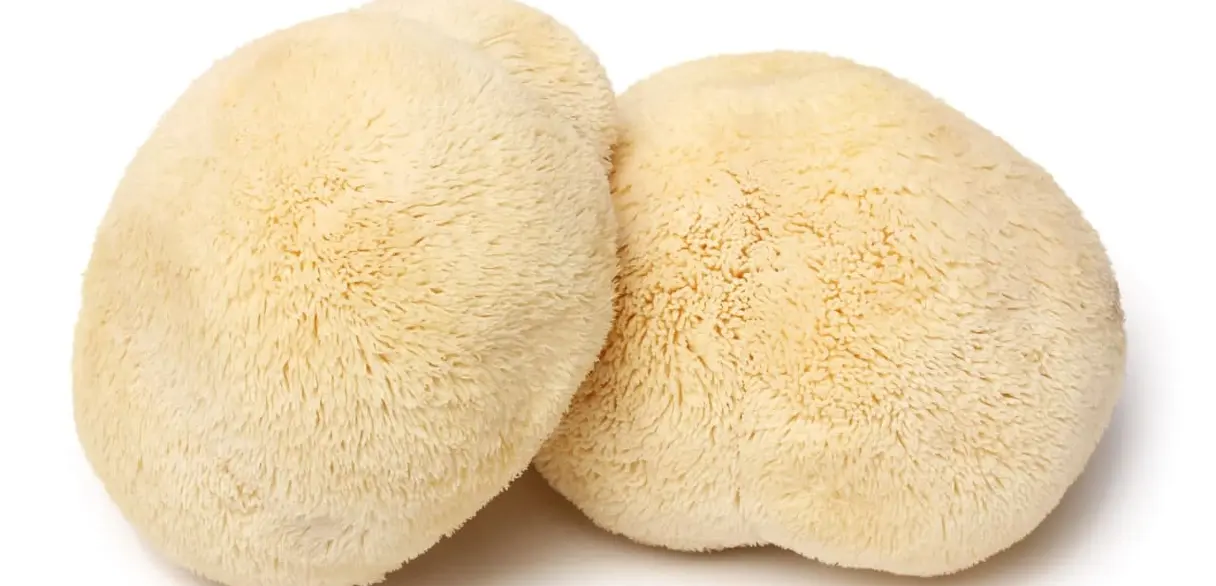
Hericium erinaceus (Lion's Mane, German Igel-Stachelbart, Japanese Yamabushitake, Chinese Hou Tou Gu, English Lion's Mane/Bearded Hedgehog) is a saprophyte, or a mild parasite, i.e. it uses the tree on which it grows for its own benefit. It creates fruiting bodies on the trunks of injured or dead trees. These are absolutely unique and unmistakable. The fruiting body itself has a spherical shape, most often with a diameter of 7 to 15 cm, and soft protrusions (spines) extend from it, which form that "lion's mane", which can enlarge the fruiting body up to 40 cm. Hericium can be found in Asia, Europe and North America. It has not yet been found on the African continent. However, its occurrence in the wild is rare, and it is on the red list of endangered species. However, it is possible to cultivate Hericium artificially for commercial purposes and for the creation of food supplements and consumption. Hericium is very sought after in this regard, as unlike other mushrooms, it lacks a certain bitterness and astringency. It therefore has a sweetish, very delicate taste. Hericium has been used as a medicine for thousands of years. There is evidence that it was used by the ancient Chinese and also by the Indians of North America. In ancient China, Hericium was used mainly for its ability to harmonise the stomach and spleen – pressure, pain and burning in the stomach area, digestive problems, heartburn, rising juices, nausea, belching, bad breath, mushy stools, bloating, stomach ulcers, etc. Ancient Chinese and Japanese doctors were able to use its An Shen function (calming the spirit) and also knew of its beneficial effect on strengthening brain functions, e.g. in dementia.
Indians used Hericium powder to stop bleeding.
Hericium did not enter natural science books until the 18th century, thanks to J. B. F. Bulliard, who gave it the name Hydnum erinaceus. The mushroom owes its current name to Ch. H. Persoon, who changed it to Hericium erinaceus in 1797.
Hericium is now called "natural nutrition for neurons". Hericium is currently the subject of many studies that investigate the effect of Hericium (mainly one of its components, which is the phytosterol erinacine) on its ability to stimulate the production of NGF (nerve growth factor). A low level of NGF has an effect on the development of Alzheimer's disease or dementia. NGF is a protein that stimulates the growth and differentiation of nerve cells. It is essential for the regeneration of damaged neurons in brain tissue (e.g. in Alzheimer's disease). According to the latest research, NGF improves the survival of people after a heart attack. It also reduces the risk of heart failure.
Scientists from Pavia, Italy, published their study on the neurobiology of romantic love in the April issue of the journal Psychoneuroendocrinology. They monitored the concentrations of neurotrophic substances in the bloodstream of individuals who were newly in love and compared them with values measured in "healthy" controls (people without a partner or living in a long-term partnership). They found that those in love have almost double the amount of nerve growth factor (NGF) flowing in their veins, and the level of this factor increases with the intensity of being in love. In this context, a prying question arises as to whether the increased occurrence of this protein in the bloodstream cannot be a consequence of its acute deficiency in brain tissue, which would explain many of the accompanying signs of intense being in love. It may be a consolation to those in love that this hypothetical "damage" to the brain is apparently not permanent, as the aforementioned study found that the NGF level reaches a normal level after 12-24 months of a partnership.
Si Qi (nature): neutral
Wu Wei (taste): sweet, bland
Gui Jing (tropism): spleen, stomach, heart (according to other sources + liver, kidneys or all circuits)
Effects according to traditional Chinese medicine in more detail:
1, Digestive problems
2, Neurological and psychological problems
3, Immunomodulatory and anti-cancer effects of Hericium
a, Mushrooms in the form of extracts (recommended form of use)
If you are taking mushrooms in the form of 30% extracts, I recommend:
Preventive use
For milder health problems
For more serious health problems
b, Mushrooms in tincture
c, Mushrooms in the form of powder (powder, biomass)
d, Dried mushrooms
Mushrooms have many effects, which is due to the fact that they contain many biologically active, effective substances. We will mention some of them in the following text.
Sugar compounds, polysaccharides
Polysaccharides and carbohydrates are the most represented in mushrooms, they are present mainly in the membranes of mushroom cells. Depending on the composition, branching, molecular weight, they have various effects, anti-tumour, against oxidative stress, immune-stimulating, etc. are described.
Polysaccharides in Hericium consist of both crude fibre, insoluble in water, which is not digested and is food for our intestinal bacteria, it benefits them. Furthermore, there are polysaccharides that are absorbed from the digestive tract. Among the most biologically significant are glucans. Hericium contains both β-1,3 and β-1,6 branched glucans. Galactoxyloglucans also belong to glucans. When discussing polysaccharides, we must not forget the HPB-3 polysaccharide, which consists of fucose, d-glucose and d-galactose, and the HEPF3 composed mainly of galactose and fucose.
Besides complex carbohydrates, individual carbohydrates are also found in Hericium, i.e. sugars, these are mainly rhamnose, glucose, galactose, arabitol and also mannitol, which is used in clinical practice as a diuretic, i.e. it supports the excretion of fluids from the body through urine.
Glycoproteins (compounds of carbohydrates and proteins)
From Hericium, scientists also extracted glycoproteins, which can stimulate the immune system and prevent the growth of tumours. One of the most important is HEG-5.
Sterols
Sterol compounds are steroid compounds, they have the same cholesterol core. The most significant representative of sterols in mushrooms is ergosterol, vitamin D2. Other sterols are erinarols A to J, ergostane-type sterols, etc. These have anti-inflammatory, anti-tumour effects. To make the list more comprehensive, we will mention other sterols, namely 5-α-ergostan-3-one, 5-α-stigmasten-22-en-3-one and 5-α-stigmastan-3-one, campesterol, campestanol.
Vitamin B12 – lactone
Studies show that Hericium contains an inactive form of vitamin B12 (c-lactone), which can probably be converted into an active form. Hericium could therefore be a source of this vitamin, which would be important mainly for vegetarians.
Volatile (essential, volatile) components, giving the mushroom its scent
Hericium also contains components that can be described as essential oils. The main component is palmitic, linoleic, phenylacetaldehyde and benzaldehyde. The aroma of the mushroom is provided by 2-methyl-3-furanthiol, 2-ethylpyrazine and 2,6-diethylpyrazine. These essential oils have the ability to inactivate pathogenic bacteria.
Terpene and phenolic compounds
Both mentioned types of compounds are very important. They are carriers of antimicrobial, anti-inflammatory and anti-tumour effects of Hericium. They also support the production of nerve growth factor, which is behind the regeneration and protection of nerve tissue.
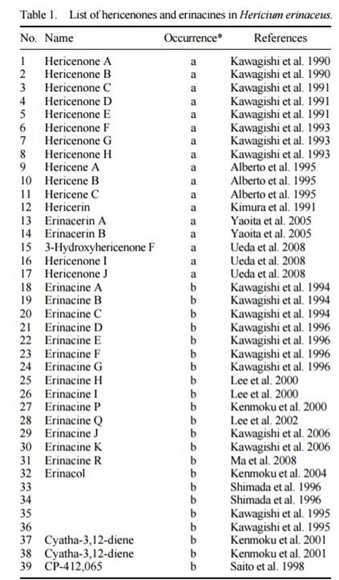
Terpene compounds include erinacines, while hericenones are classified among phenols (their detailed overview is in the attached image).
http://www.tandfonline.com/doi/pdf/10.1080/21501201003735556
Alkaloids
We cannot forget that alkaloids are found in Hericium. The most famous are hericerins (isoindolinone meroterpenoid alkaloid) and erinacenes. These are carriers of both biological activity and scent. These are, for example, hericerin A, isohericenone J, erinacen D, etc.
Proteins and amino acids
Although mushrooms are classified more in the plant kingdom, they also contain a whole spectrum of amino acids and proteins. According to the concentration of amino acids, L-alanine and L-leucine are in Hericium. Among the significant proteins in Hericium are enzymes, e.g. enzymes that decompose cellulose and lignin, which mushrooms use as a source of nutrients. They are amylases, proteases, glucosidases and lactases.
Fats, fatty acids
Just like with proteins, we might be surprised that fats/fatty acids are found in the mushroom. These are commonly found in plants more in seeds and kernels. In Hericium, there are both saturated and mainly unsaturated fatty acids, e.g. stearic and palmitic.
Minerals, trace elements and vitamins
If we want to have a more comprehensive list of Hericium components, we cannot leave out minerals and trace elements, i.e. sodium, potassium, calcium, magnesium, phosphorus, zinc, selenium, copper... As for vitamins, these are vitamin D and B-group vitamins.
Other compounds
Recently, erinachromanes A and B and erinafenol A (2019) were also obtained from Hericium. They are most likely involved in influencing plant growth, they can reduce the growth of lettuce. So they most likely have herbicidal effects. They have not been researched further yet.
In 2020, isoindolinones were also found, i.e. e.g. hericenols, isohericenol A, which significantly increases the production of nerve growth factor, furthermore it is corallocin and other hericerins.
Extremely important are also amycenones, which positively influence the nervous system.
The overview of individual components already gives a hint that there are many effects of Hericium. We will name only the most fundamental ones, which are verified by studies.
We mention this effect first, as in this regard it is a property completely unique to Hericium.
The positive effect on the nervous system is due to the reduction of oxidative stress, inflammation, but mainly the ability to increase the production of the body's natural nerve growth factor. This factor supports regeneration, renewal of the nervous system, both the central nervous system and the peripheral one.
Studies with damage to individual nerves are carried out mainly on mice or rats, whose nerve is interrupted, for example, and parts of the animals are given Hericium. The results of these studies proved that the very animals that receive Hericium are at an advantage. Regeneration occurs, i.e. restoration of nerve functionality, which also manifests itself in the restoration of sensitivity and mobility.
As for the effect of Hericium on the central nervous system, there are not only studies with animals, but also clinical studies, i.e. studies in which volunteers participate.
We will look closer at some studies. In one study with mice, the administration of erinacin A led to the protection of nerve cells from damage. The animals were given a substance that was supposed to damage the neurons responsible for the production of dopamine, which would induce a state similar to human Parkinson's disease. Erinacin significantly reduced the amount of cells that died, so Parkinson's disease did not develop in the mice with erinacin.
In another study, the administration of Hericium led to an improvement in spatial memory and also recognition functions and the ability to learn. Besides the direct effect of Hericium on brain functions, Hericium also supports the psyche. In mice, it reduces anxiety and depressive behaviour, mainly thanks to the fact that it increases the formation of nerve cells in the hippocampus of adult mice. In one study, scientists even compared the effect of Hericium and paroxetine (an antidepressant commonly given to patients with depression). The mice were exposed to stressful situations, while both the drug and amycenones led to the calming of the stressed mice. The effectiveness of Hericium, or amycenones, was on par with the effects of paroxetine!
The antidepressant effect of amycenone was also confirmed in mice that were exposed to stressful situations, their reaction to them was "calmer" when amycenone was administered, the same effect was achieved with the commonly prescribed antidepressant paroxetine.
According to studies, Hericium could also be beneficial for patients with demyelinating diseases, e.g. multiple sclerosis. In these diseases, the myelin sheath of nerve fibres is damaged and the transmission of impulses is disrupted due to autoimmune inflammation. Nerve growth factor, which increases when Hericium is administered, also supports the formation of myelin and the renewal of the myelin sheath.
Some diseases are accompanied by demyelination, i.e. loss of myelin sheaths of axons, which leads to disruption of impulse conduction. We encounter this mainly in multiple sclerosis of the brain and spinal cord. Here, myelin is destroyed by the immune system, as antibodies against its components are produced. Even in this case, Hericium proved to be a good helper. According to experiments, the support of neural growth factor production is also associated with the new formation of myelin and remyelination.
Of course, we will not stay only with animals when clinical studies exist.
Degenerative diseases of the brain are a big problem, it is also due to the fact that people are living to an ever higher age, so people live to see their dementia. Inflammation occurs in the brain, its damage and a decrease in brain functions, which manifests itself mainly by a disorder of memory, the ability to learn, orient oneself in space, etc. The most famous neurodegenerative diseases are Alzheimer's and Parkinson's disease.
In one of the studies, people with mild dementia used Hericium, it involved 7 patients, of whom 6 experienced an improvement in brain functions after using Hericium! They remembered a little better, communicated and were able to understand. Another study was based on 30 patients, who were divided 1:1. One group received Hericium, the other did not. In those who used Hericium, an improvement in brain functions occurred after 16 weeks. This did not happen in patients who did not receive Hericium.
Our mental state is also connected to the brain. Currently, many people suffer from anxiety or depression and sleep disorders. Hericium was tested in patients with depression and insomnia, they used it for 4 weeks, during which the symptoms of depression, anxiety were alleviated, moreover, the quality of sleep significantly improved, thus also restfulness and well-being.
Menopause in women is often associated with mood swings, they often suffer from depression, exactly such women were selected for one of the studies. 30 women received Hericium, which led to the alleviation of menopause symptoms, both psychological, physical and mental. Concentration, focus, etc. improved.
Hericium was also tested on people with overweight and obesity who also suffered from sleep disorders and bad mood, in all participating persons an improvement occurred after use.
The preparation Amyloban3399 was also used for the studies, it is a standardised preparation from Hericium, in which there is a large amount of amylobanins, hericenones and amycenones. Its use led to an improvement in brain functions in healthy volunteers. They reported that they remember more easily, maintain attention better, their mood improved, etc.
Hericium is also suitable to use as prevention, i.e. before problems arise. It reduces oxidative stress, inflammation, protects the nervous system from damage. It therefore slows down the ageing of the brain, i.e. its degeneration.
Saitsu Y, Nishide A, Kikushima K, Shimizu K, Ohnuki K. Improvement of cognitive functions by oral intake of Hericium erinaceus. Biomed Res. 2019;40(4):125-131. doi: 10.2220/biomedres.40.125.
Rossi P, Cesaroni V, Brandalise F, Occhinegro A, Ratto D, Perrucci F, Lanaia V, Girometta C, Orrù G, Savino E. Dietary Supplementation of Lion's Mane Medicinal Mushroom, Hericium erinaceus (Agaricomycetes), and Spatial Memory in Wild-Type Mice. Int J Med Mushrooms. 2018;20(5):485-494. doi: 10.1615/IntJMedMushrooms.2018026241.
Ryu S, Kim HG, Kim JY, Kim SY, Cho KO. Hericium erinaceus Extract Reduces Anxiety and Depressive Behaviors by Promoting Hippocampal Neurogenesis in the Adult Mouse Brain. J Med Food. 2018 Feb;21(2):174-180. doi: 10.1089/jmf.2017.4006. Epub 2017 Nov 1.
Yang PP, Chueh SH, Shie HL, Chen CC, Lee LY, Chen WP, Chen YW, Shiu LY, Liu PS. Effects of Hericium erinaceus Mycelium Extracts on the Functional Activity of Purinoceptors and Neuropathic Pain in Mice with L5 Spinal Nerve Ligation. Evid Based Complement Alternat Med. 2020 May 13;2020:2890194. doi: 10.1155/2020/2890194. PMID: 32508945; PMCID: PMC7244964.
Nagano M, Shimizu K, Kondo R, Hayashi C, Sato D, Kitagawa K, Ohnuki K.Reduction of depression and anxiety by 4 weeks Hericium erinaceus intake. Biomed Res. 2010;31(4):231-7.
Vigna L, Morelli F, Agnelli GM, Napolitano F, Ratto D, Occhinegro A, Di Iorio C, Savino E, Girometta C, Brandalise F, Rossi P. Hericium erinaceus Improves Mood and Sleep Disorders in Patients Affected by Overweight or Obesity: Could Circulating Pro-BDNF and BDNF Be Potential Biomarkers? Evid Based Complement Alternat Med. 2019 Apr 18;2019:7861297. doi: 10.1155/2019/7861297. PMID: 31118969
Chong PS, Fung ML, Wong KH, Lim LW. Therapeutic Potential of Hericium erinaceus for Depressive Disorder. Int J Mol Sci. 2019 Dec 25;21(1):163. doi: 10.3390/ijms21010163. PMID: 31881712; PMCID: PMC6982118.
Mori K, Inatomi S, Ouchi K, Azumi Y, Tuchida T. Improving effects of the mushroom Yamabushitake (Hericium erinaceus) on mild cognitive impairment: a double-blind placebo-controlled clinical trial. Phytother Res. 2009;23(3):367-72.
Kawagishi H, Zhuang C, Shnidman E. The anti-Dementia effect of Lion’s Mane mushroom and its clinical application. Townsend Letter for Doctors and Patients, 2004
Mori K, Inatomi S, Ouchi K, Azumi Y, Tuchida T.Improving effects of the mushroom Yamabushitake (Hericium erinaceus) on mild cognitive impairment: a double-blind placebo-controlled clinical trial. Phytother Res. 2009;23(3):367-72.
Kawagishi H, Zhuang C, Shnidman E. The anti-Dementia effect of Lion’s Mane mushroom and its clinical application. Townsend Letter for Doctors and Patients, 2004
Kolotushkina E.V, Moldavan M.G, Voronin K.Y, Skibo G.G. The influence of Hericium erinaceus extract on myelination process in vitro. Fiziol Z.H. 2003;49(1):38-45.
Grygansky A.P, Moldavan M.G, Kolotushkina O.V, Skibo G.G. Hericium erinaceus (Bull.: Fr.) Pers. extract effect on nerve cells. Int J Med Mushr. 2001;3(2-3):152
Kawamoto K, Matsuda H. Nerve growth factor and wound healing. Prog Brain Res. 2004;146:369–84
Zhang Yi, Yang Shao-long, Wang Ai-hong, et al., “Protective Effect of Ethanol Extracts of Hericium erinaceus on Alloxan-Induced Diabetic Neuropathic Pain in Rats,” Evidence-Based Complementary and Alternative Medicine, Article ID 595480, in press.
S. C. Apfel et al. Recombinant human nerve growth factor in the treatment of diabetic polyneuropathy. Neurology. 1998;51:695-702.
Long-term treatment with recombinant nerve growth factor for HIV-associated sensory neuropathy. G. Schifitto et al. Neurology. 2001;57:1313-1316
Myong Ki Kim, Woon Yong Choi, Hyeon Yong LeeNeuroprotective effect of Hericium erinaceum against oxidative stress on PC12 cells. Arch Physiol Biochem 2014 Oct 30:1-7.
Kah-Hui Wong, Murali Naidu, Pamela David, et al., “Peripheral Nerve Regeneration Following Crush Injury to Rat Peroneal Nerve by Aqueous Extract of Medicinal Mushroom Hericium erinaceus. Evidence-Based Complementary and Alternative Medicine, vol. 2011, Article ID 580752, 10 pages, 2011.
Mori K, Inatomi S, Ouchi K, Azumi Y, Tuchida T. Improving effects of the mushroom Yamabushitake (Hericium erinaceus) on mild cognitive impairment: a double-blind placebo-controlled clinical trial. Phytother Res. 2009 Mar;23(3):367-72.
Nagano M, Shimizu K, Kondo R, Hayashi C, Sato D, Kitagawa K, Ohnuki K. Reduction of depression and anxiety by 4 weeks Hericium erinaceus intake. Biomed Res. 2010 Aug;31(4):231-7.
Since the immune system is very burdened every day and without its proper functioning it is not possible to live, it is only logical that possibilities are being sought to strengthen it, but not burden it further.
Natural substances found in Hericium can help very well. Beta glucans have the most significant immunomodulatory effects.
Strengthening the activity of the immune system is associated with an increase in anti-infective and anti-tumour immunity, therefore also with lower morbidity and protection against cancerous growth.
During experiments on immune system cells and mice, it was possible to confirm that the addition of Hericium increases the activity of immune cells. It stimulates them to start an immune response and produce substances (cytokines) that further strengthen the immune reaction.
It was found, for example, that phagocytes were able to better engulf foreign particles, which in the organism can be, for example, viruses or bacteria. Moreover, they were able to kill engulfed bacteria much more effectively and display their proteins on their surface for recognition by T lymphocytes, which then also leads to the activation of B lymphocytes and the production of antibodies. Hericium also activates NK cells, which are then strengthened in the fight against tumour cells.
Just as activation is important, dampening the immune system is also important so that the inflammatory response does not get out of control. More and more people suffer from allergies and autoimmune diseases, when the immune system reacts with inflammation to harmless or own antigens. In these diseases, it is necessary to administer drugs that moderate the activity of the immune system. It turns out that Hericium can do this.
More clinical studies have taken place with patients with bowel inflammation, ulcerative colitis and Crohn's disease. In one study, there were 50 patients who suffered from Crohn's disease, and they were divided into two groups. Half received an ineffective substance and the other part the preparation Andosan (contains Hericium, Agaricus and Maitake) for 21 days. Patients were examined before and after 21 days. Patients with Andosan reported that their condition improved. They were less tired, there was a calming in the intestines and thus their overall quality of life significantly increased. What the patients said was also confirmed by blood tests, they revealed that a reduction in inflammation actually occurred.
However, it turned out that Hericium does not reduce difficulties only by direct action on the immune system, but also by supporting the correct composition of the intestinal microflora. Intestinal bacteria also modulate the immune response, in the direction of balance, i.e. towards a reduction of undesirable reactions and inflammation.
It is therefore clearly visible how comprehensively Hericium works.
Qin M, Geng Y, Lu Z, Xu H, Shi JS, Xu X, Xu ZH. Anti-Inflammatory Effects of Ethanol Extract of Lion's Mane Medicinal Mushroom, Hericium erinaceus (Agaricomycetes), in Mice with Ulcerative Colitis. Int J Med Mushrooms. 2016;18(3):227-34.
Yao W, Zhang JC, Dong C, Zhuang C, Hirota S, Inanaga K, Hashimoto K.
Effects of amycenone on serum levels of tumor necrosis factor-α, interleukin-10, and depression-like behavior in mice after lipopolysaccharide administration. Pharmacol Biochem Behav. 2015 Sep;136:7-12.
Chang Gue Son, Jang Woo Shin, Jung Hyo Cho, Chong Kwan Cho, Cheol-Heui Yun, Wantae Chung, Seung Hyun Han Macrophage activation and nitric oxide production by water soluble components of Hericium erinaceum. International Immunopharmacology Volume 6, Issue 8, August 2006, Pages 1363–1369.
Jong Seok Lee, Jae Youl Cho, Eock Kee HongStudy on macrophage activation and structural characteristics of purified polysaccharides from the liquid culture broth of Hericium erinaceusCarbohydrate Polymers 08/2009; 78(1):162-168.
Yim MH, Shin JW, Son JY, Oh SM, Han SH, Cho JH, Cho CK, Yoo HS, Lee YW, Son CG.
Soluble components of Hericium erinaceum induce NK cell activation via production of interleukin-12 in mice splenocytes. Acta Pharmacol Sin. 2007;28(6):901-7.
Kim YO, Lee SW, Oh CH, Rhee YH. Hericium erinaceus suppresses LPS-induced pro-inflammation gene activation in RAW264.7 macrophages. Immunopharmacol Immunotoxicol. 2012;34(3):504-12.
Therkelsen SP, Hetland G, Lyberg T, Lygren I, Johnson E. Effect of the Medicinal Agaricus blazei Murill-Based Mushroom Extract, AndoSanTM, on Symptoms, Fatigue and Quality of Life in Patients with Crohn’s Disease in a Randomized Single-Blinded Placebo Controlled Study. Green J, ed. PLoS ONE. 2016;11(7):e0159288.
Diling C, Xin Y, Chaoqun Z, Jian Y, Xiaocui T, Jun C, Ou S, Yizhen X. Extracts from Hericium erinaceus relieve inflammatory bowel disease by regulating immunity and gut microbiota. Oncotarget. 2017 Sep 6;8(49):85838-85857. doi: 10.18632/oncotarget.20689. PMID: 29156761; PMCID: PMC5689651.
More and more people who fall ill with some type of tumour disease are appearing in the population. With progress in medicine, i.e. rapid diagnostics in early stages and effective treatment, there are more and more people who survive cancer. Nevertheless, many people succumb to the disease and the treatment itself is very demanding and damaging. Scientists are therefore trying to find the most effective and at the same time low-toxicity treatment. They therefore also turned to Hericium. Data from clinical studies are not available, creating such a study is also very complicated from an ethical point of view.
Most often, studies are carried out directly on cancer cells in "dishes". Hericium or its components are added to tumour cells that thrive and actively multiply, and it is observed how the cells react to the presence of Hericium. In tumour cells, there is an arrest of division and also the activation of intracellular signalling pathways that lead to cell death, i.e. to apoptosis. It is interesting that the concentrations of Hericium that are toxic to tumour cells are harmless to healthy cells. In tumour cells, it even limits their ability to travel and metastasise. The anti-tumour effect was confirmed, for example, on brain tumour cells, colon, breast, lung, soft tissues, leukaemia, etc.
However, Hericium not only kills tumour cells, but also limits the new formation of blood vessels. Tumour cells divide extremely quickly, which requires nutrients and these are brought into the tumour by new blood vessels, the formation of which tumour cells stimulate. Hericium acts against this. It prevents the new formation of blood vessels.
It is also necessary to mention the fact that Hericium fights tumours also thanks to the fact that it strengthens the immune system, and therefore also its ability to destroy tumour cells.
Besides the direct effect on cancer cells, Hericium limits cancerous growth also thanks to the fact that it reduces abiogenesis, i.e. the new formation of blood vessels. Tumour cells multiply very quickly, they consume much more oxygen and nutrients than healthy cells. They therefore need to be supplied with more blood and support the creation of new blood vessels, through which more blood with nutrients and oxygen would reach them. Without new blood vessels, the tumour can "suffer from hunger", its growth slows down, or cancer cells can die.
We have now mentioned studies taking place on cells, there are also studies on animals, which are very interesting, as it is possible to assume that Hericium could function this way in other animals including humans.
One of the studies tested the anti-cancer effects of Hericium on mice with liver cancer. Part of the mice were given Hericium and part nothing and part the chemotherapeutic 5-fluorouracil. In mice that received Hericium, just like in mice with the chemotherapeutic, a reduction in the size of the tumour occurred. The only difference was that Hericium had no undesirable effects, while 5-fluorouracil did.
Anti-metastatic effects of Hericium were also tested, on a mouse model, when cancer of the colon was implanted in the animals, in which it is known that it metastasises to the lungs. Mice that used Hericium had approx. 55% lower metastasis to the lungs, which is a large number.
Kim SP, Nam SH, Friedman M. Hericium erinaceus (Lion's Mane) mushroom extracts inhibit metastasis of cancer cells to the lung in CT-26 colon cancer-tansplanted mice. J Agric Food Chem. 2013;61(20):4898-904.
Wang JC, Hu SH, Su CH, Lee TM Antitumor and immunoenhancing activities of polysaccharide from culture broth of Hericium spp. Kaohsiung J Med Sci. 2001;17(9):461-7.
Kim SP, Kang MY, Kim JH, Nam SH, Friedman M. Composition and mechanism of antitumor effects of Hericium erinaceus mushroom extracts in tumor-bearing mice. J Agric Food Chem. 2011;59(18):9861-9.
Lee JS, Hong EK. Hericium erinaceus enhances doxorubicin-induced apoptosis in human hepatocellular carcinoma cells. Cancer Lett. 2010;297(2):144-54.
Kim SP, Kang MY, Choi YH, Kim JH, Nam SH, Friedman M. Mechanism of Hericium erinaceus (Yamabushitake) mushroom-induced apoptosis of U937 human monocytic leukemia cells. Food Funct. 2011;2(6):348-56.
Lee KC, Kuo HC, Shen CH, Lu CC, Huang WS, Hsieh MC, Huang CY, Kuo YH, Hsieh YY, Teng CC, Lee LY, Tung SY. A proteomics approach to identifying novel protein targets involved in erinacine A-mediated inhibition of colorectal cancer cells' aggressiveness. J. Cell. Mol. Med. 2016 Oct 6.
Li G, Yu K, Li F, Xu K, Li J, He S, Cao S, Tan G. Anticancer potential of Hericium erinaceus extracts against human gastrointestinal cancers. J Ethnopharmacol. 2014 Apr 28;153(2):521-30.
Kim SP, Nam SH, Friedman M. Hericium erinaceus (Lion's Mane) mushroom extracts inhibit metastasis of cancer cells to the lung in CT-26 colon cancer-tansplanted mice. J Agric Food Chem. 2013 May 22;61(20):4898-904.
Zhang F, Lv H, Zhang X. Erinacerins, Novel Glioma Inhibitors from Hericium erinaceus, Induce Apoptosis of U87 Cells through Bax/Capase-2 Pathway. Anticancer Agents Med Chem. 2020;20(17):2082-2088. doi: 10.2174/1871520620666200804104243.
Hericium also has the ability to eliminate infectious pathogens. This is a very important finding, as there are no drugs for most viral diseases and the effectiveness of antibiotics is still decreasing, i.e. bacterial resistance is growing. And it is realistically possible that some bacteria will become indestructible if a new antibiotic is not developed.
During experiments with Hericium, it was possible to prove that it kills, or at least limits the multiplication of, even very dangerous and resistant ones, such as e.g. staphylococcus MRSA (methicillin-resistant). Staphylococcus is very sensitive to hericenones. Furthermore, Hericium was tested on E. coli (the most common cause of urinary and intestinal infections) and on salmonella. Both bacteria were suppressed by Hericium. One cannot ignore the fact that Hericium can also eliminate Helicobacter pylori, which causes inflammation of the stomach lining and is a risk factor for the development of stomach cancer.
Hericium also suppresses viral infections. It reduces the multiplication of viruses, e.g. HIV, dengue fever virus.
Even here we must note that the anti-infective effects of Hericium are based also on the fact that it strengthens anti-infective immunity.
Besides bacterial and viral diseases, Hericium can also be applied in the case of fungal and yeast infections, it can kill the yeast Candida albicans and the mould Aspergillus niger.
There are also studies that document the effect of Hericium on single-celled parasites. It is e.g. in the case of ciliates, which cause infections in fish, which can be a big problem in commercial fishponds.
Kawagishi H et al. Anti-MRSA compounds of Hericium erinaceus. Int J Med Mushr. 2005;7(3):350
Kim DM, Pyun CW, Ko HG, Park WM. Isolation of Antimicrobial Substances from Hericium erinaceum. Mycobiology. 2000 Mar;28(1):33-38. English.
Wong, K.H.; Sabaratnam, V.; Abdullah, N.; Kuppusamy, U.R.; Naidu, M. (2009) Effects of cultivation techniques and processing on antimicrobial and antioxidant activities of hericium erinaceus (Bull.:Fr.) pers. extracts. Food Technology and Biotechnology, 47 (1). pp. 47-55.
Kim, Sung Phil; Moon, Eunpyo; Nam, Seok Hyun; Friedman, Mendel. Hericium erinaceus mushroom extracts protect infected mice against salmonella typhimurium-induced liver damage and mortality by stimulation of innate immune cells. J. Agric. Food Chem., 2012, 60 (22), pp 5590–5596.
Kawagishi H et al. Anti-MRSA compounds of Hericium erinaceous. Int J Med Mushr. 2005;7(3):350
Zhong Zhang, Rui-Na Liu, Qing-Jiu Tang, Jing-Song Zhang, Yan Yang, Xiao-Dong Shang. A new diterpene from the fungal mycelia of Hericium erinaceus. Phytochemistry Letters, Volume 11, March 2015, Pages 151–156.
Okamoto, K. et al., 1993. "Antimicrobial chlorinated orcinol derivatives from mycelium of Hericium erinaceus." Phytochemistry, vol. 34, no. 5, 1445-1446.
Shang X, Tan Q, Liu R, Yu K, Li P, Zhao GP. In vitro anti-Helicobacter pylori effects of medicinal mushroom extracts, with special emphasis on the Lion's Mane mushroom, Hericium erinaceus (higher Basidiomycetes). Int J Med Mushrooms. 2013;15(2):165-74.
Yanrui Li, Guoqing Zhang, Tzi Bun Ng, and Hexiang Wang, “A Novel Lectin with Antiproliferative and HIV-1 Reverse Transcriptase Inhibitory Activities from Dried Fruiting Bodies of the Monkey Head Mushroom Hericium erinaceum,” Journal of Biomedicine and Biotechnology, vol. 2010, Article ID 716515, 9 pages, 2010.
Ellan K, Thayan R, Raman J, Hidari KIPJ, Ismail N, Sabaratnam V. Anti-viral activity of culinary and medicinal mushroom extracts against dengue virus serotype 2: an in-vitro study. BMC Complement Altern Med. 2019 Sep 18;19(1):260. doi: 10.1186/s12906-019-2629-y.
Globally, diabetes is becoming a big problem. There is an increase mainly in people who suffer from type II diabetes, which is associated with age and obesity, even though younger people still suffer from it. Diabetes is associated with an increase in blood sugar values, which damages the lining of blood vessels, nerves, and therefore also the retina, kidneys, immune system, worsens healing, oxidative stress increases and there is inflammation in the body, etc. Glucose gets into the interior of the cell thanks to the action of insulin. While in type I diabetes, insulin production is always reduced, while in type II diabetes there can be a different problem. There may be enough insulin, but the cells are insensitive to its action. The result is therefore the same, high blood sugar values.
Regarding diabetes, studies were carried out mainly on animal models of diabetes, i.e. by administering streptozocin, a state identical to human diabetes was induced. It turned out that Hericium reduces oxidative stress, which reduces inflammation and damage to the pancreas. This is of course associated with an increase in insulin production. This leads to a reduction in sugar values in the blood, and therefore also an improvement in the condition of the experimental animals.
Liang B, Guo Z, Xie F, Zhao A. Antihyperglycemic and antihyperlipidemic activities of aqueous extract of Hericium erinaceus in experimental diabetic rats. BMC Complement Altern Med. 2013;13:253. Published 2013 Oct 3. doi:10.1186/1472-6882-13-253
Wang, J.C.; Hu, S.H.; Wang, J.T.; Chen, K.S.; et al. Hypoglycemic effect of extract of Hericium erinaceus [2005]J Sci Food Agric 85:641–646 (2005) DOI: 10.1002/jsfa.1928
Jinn Chyi Wang, Shu Hui Hu, Jih Terng Wang, Ker Shaw Chen, Yi Chen Chia.Hypoglycemic effect of extract of Hericium erinaceus. Journal of the Science of Food and Agriculture Volume 85, Issue 4, pages 641–646, March 2005
The liver is a very burdened organ. They can be damaged by toxins, drugs, alcohol, but also infections or autoimmune diseases. We can mention, for example, a study with mice that were exposed to alcohol, which damaged the liver, which led to an increase in liver enzymes in the blood. Mice that received Hericium had less damaged livers. Liver enzymes and findings on the liver decreased.
Hao L, Xie Y, Wu G, et al. Protective Effect of Hericium erinaceus on Alcohol Induced Hepatotoxicity in Mice. Evid Based Complement Alternat Med. 2015;2015:418023. doi:10.1155/2015/418023
Zhang Z, Lv G, Pan H, Pandey A, He W, Fan L. Antioxidant and hepatoprotective potential of endo-polysaccharides from Hericium erinaceus grown on tofu whey. Int J Biol Macromol. 2012 Dec;51(5):1140-6. doi: 10.1016/j.ijbiomac.2012.09.002.
High values of fats in the blood are a big problem. Fats settle in blood vessel walls, organs, including the liver. Development of cardiovascular diseases and hepatosteatosis therefore occurs.
Experiments were carried out on rodents that were fed a high-fat diet so that an increase in weight and fats in the blood would occur. If Hericium was administered to part of the mice or rats, these animals had a lower level of fats, namely total cholesterol, bad cholesterol and triglycerides. On the contrary, an increase in the concentration of good HDL cholesterol was captured.
The reduction of lipids is then associated also with a better condition of the cardiovascular system, i.e. blood pressure can decrease, the risk of heart or brain attack decreases, etc.
Hiwatashi K, Kosaka Y, Suzuki N, Hata K, Mukaiyama T, Sakamoto K, Shirakawa H, Komai M. Yamabushitake mushroom (Hericium erinaceus) improved lipid metabolism in mice fed a high-fat diet.

Characteristics and effects of mushrooms according to traditional Chinese medicine

Description of herbal blends, effects according to Chinese medicine and main usage

Dietary recommendations including individual foods for specific patterns

Characteristics and effects of herbs according to traditional Chinese medicine

Characteristics of food and its influence on individual organs

Classification of herbs and mushrooms by individual diseases


Subscribe to our newsletter and you won't miss any promotions or important information