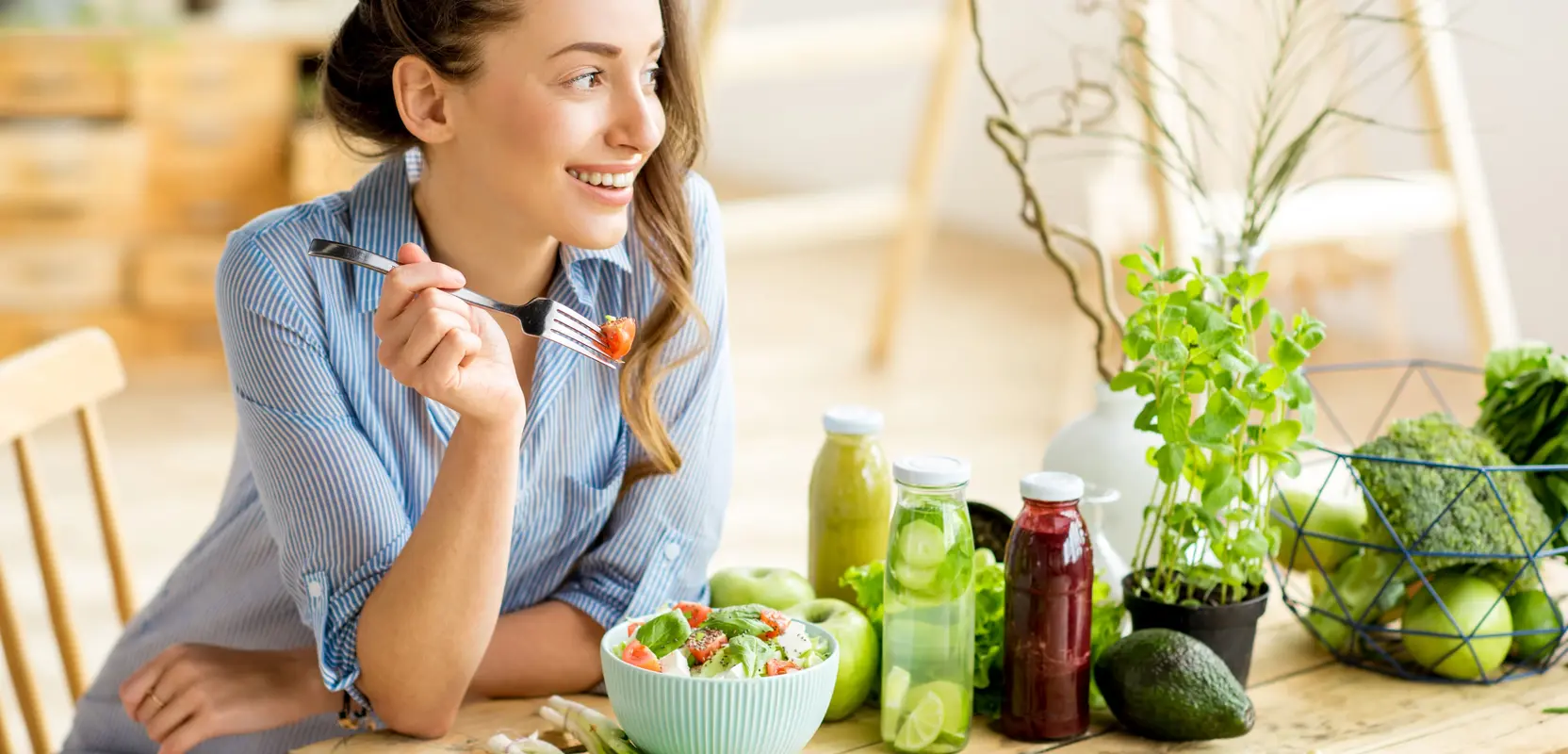


First of all, I would like to point out that there are different approaches to how a sick person, who can use food to balance Yin and Yang imbalances, should eat, and how a healthy person should eat.
We will discuss nutrition for individual patterns (basic imbalances of the organism or diseases) in the following sections (see nutrition for individual patterns). The problem is that every imbalance requires a different approach. And every sick person can have various, often even contradictory, imbalances within them, so the composition of the diet can differ significantly for each patient.
Sometimes people look for the “Holy Grail” of nutrition. They are looking for certain foods that universally help with all health problems. Such foods do not exist (perhaps medicinal mushrooms come close to this ideal). At a certain stage or in a certain state of health, one specific food may help, but for another person with a different illness, it may cause harm. One food may help you today, but in six months, when your condition changes, it may harm you. Everything in nutrition is very individual, and it is necessary to take into account the overall constitution and the current state of the specific person.
Even for healthy people, it is difficult to speak of a uniform path for healthy eating. We are all different. What does one person good may harm another. And this also changes during life, as we grow, as we develop, depending on what we do, etc. What did you good a year ago may harm you today.
But how should we eat if we are healthy? According to Chinese medicine, no one is completely in balance. Therefore, nutrition will also be different for different people. For example, chilli peppers may harm one person and help another. Milk, which is often rejected today, may help a chilli pepper eater. But it may worsen the condition of a person suffering from phlegm. And that is how it is with all foods.
According to Chinese medicine, however, there are certain general principles that are suitable for all people. Nevertheless, take even these recommendations with a certain reserve.
First, I would mention the principle of moderation. Diet should be, first and foremost, high-quality and varied. The famous physician Zhu Dan Xi wrote: “Excessive sweetness, sourness, bitterness, pungency or saltiness, if this quintet fills our bodily structure, threatens life.” So we should avoid extremes. I will give an example. A woman wants to lose weight and will only eat vegetable salads. They contain almost no calories and are full of vitamins and minerals. It seems like a good idea. But every knowledgeable Chinese medicine therapist knows that the Spleen (our digestion) does not like overly cold foods. If she puts raw vegetables, which are cold in nature, into her stomach three times a day, she will weaken the transformative function of her Spleen. Her digestion will start to slow down, and what is more, excessive pathological dampness will begin to form, and she will not lose weight. And what is more, if she gives in once and stuffs herself with doughnuts, the weight will jump right back. And she will likely start to gradually develop other health problems, such as bloating, fatigue, soft stools, etc.
Moderation means that the quantity and composition of the diet must correspond to our needs. An accountant will eat differently, and a lumberjack will have different needs.
A common transgression of today's people is overeating. The Yang Sheng teaching recommends eating to about 80% fullness. It basically corresponds to the proverb: “Eat until half-full, drink until half-quenched.” Or also “Hunger is your friend.” Overeating excessively burdens the Spleen system (digestion) and gradually weakens its function. Which creates further scenarios of health problems.
The second principle is quality. A gentleman who was the owner of an animal feed factory used to come to me for acupuncture. Once I asked him how it was possible that in our local supermarket they have branded dog food for 150 CZK, which I normally buy from another manufacturer for 1,000 CZK. And he answered: “It is simple. They put something in it that is cheap, that will not harm the dog, but in which there are practically no nutrients. And if you give the dog a normal portion, its organism will receive a smaller amount of nutrients than it needs, and it will wither. And gradually it will start to have various health problems. Or you will have to give it a larger amount of this low-quality feed, but then you will not save money, and you will also burden its digestion with that large amount of food.”
We can learn a good lesson from this too. It makes more sense to eat smaller portions, but of high-quality food. Which is a big problem today. Most foods contain some preservatives, substitutes, stabilisers and various E-numbers. Even though they may not be outright harmful (but they often are), they do not give our organism any nutrition, and on the contrary, they burden our digestion. So eat high-quality food. Natural foods. Simple meals. Watch at least a little bit what the food consists of before you put it in your basket at the shop.
Many people say that they cannot afford high-quality food because it is expensive. But that is exactly what I am describing above. It is enough to eat less high-quality food to provide our organism with the necessary nutrients. You will have to eat, and especially buy, more of the low-quality food, so you will not save money anyway, and you will also burden your digestion with various additives. If the majority of people buy high-quality food, the behaviour of supermarkets will also change. They only use the law of supply and demand. People mainly want cheap (albeit low-quality) food. So we are not going to offer them high-quality and expensive food, we would go bust. The change must come from us, from our decisions to take responsibility for our lives.
So eat high-quality natural foods that are not industrially processed. If some food lasts on the shelf for half a year without changing, it probably won't be much of a food anymore. Eat variedly - do not prefer only certain foods. Good meals are those after which you feel fresh, full of energy. After which you are not tired or bloated.
One Chinese teaching divides foods into two groups. Into Qing Dan type foods and Wei type foods. Qing means pure, light. Dan means bland. The Qing Dan group includes foods that are easily digestible and not too strong in taste. A typical example is rice. Furthermore, cereal grains, vegetables, fruit, legumes. They are a good source for the production of Qi. They are energetically rich and yet do not burden digestion, i.e., they do not weaken the function of the Spleen. These Qing Dan foods should form the basis of our diet.
Wei foods are strong in taste and energetically very nutritious. They include meat, fish, oil, fat, spices, dairy products, eggs, salt, vinegar, fermented foods or sugar. However, these foods burden the digestive system more than Qing Dan type foods. Therefore, they should form only a smaller part of our diet.
The basis of our diet should be formed by Qing Dan type foods. Wei type foods should only slightly supplement it.
Basically, this concept corresponds roughly to what we imagine under the term “Mediterranean diet”. The diet of Mediterranean nations is composed mainly of fresh fruit and vegetables, cereals, legumes, olive oil as the main source of fats, fish and a limited amount of meat, dairy products and wine. One of the basic features of this culture of eating is that it is a balanced and simple diet. It also changes according to the season. In summer it can be slightly spicy and fresh, in winter more nourishing and warming. In the Inner Canon of the Yellow Emperor it is written: “In ancient times, people were very wise … they lived in harmony with the four seasons.”
For many people today, Wei type foods dominate. They eat a lot of meat, everything must be strong in taste, many people have a regular addiction to sugar. Look at a typical fast food, lots of fat, lots of meat, fried, baked, spicy. Typical Wei.
The problem is not only in the foods themselves, but also in the way they are prepared. Frying and baking push energy towards heat, it becomes significantly Yang. We must also keep this in mind if we are striving for a balanced diet.
Let's try to change it. Let's try to focus mainly on Qin Dan foods and use Wei only as a supplement. It will certainly benefit our health.
We have talked a lot about the importance of the Spleen so far. The Spleen is digestion. Weakening of the Spleen is one of the most common indications with which patients come to see me in the practice. The second most common is Liver stagnation from excessive or suppressed emotions. Therefore, it is generally beneficial to focus your diet on strengthening the Spleen.
Symptoms of weakened Spleen energy are: fatigue that worsens after eating, loss of appetite, flaccidity, paleness, weight loss or a tendency to be overweight, cravings for sweets, a tendency to overthink, bloating, soft stools, constipation if there is a problem with passing stools (but they should not be dry and hard). Furthermore, problems with the accumulation of pathological dampness, such as swelling, discharge, diarrhoea, weeping inflammation, phlegm, etc. These are primary symptoms. But as one of the most important ancient Chinese physicians Li Dong Yuan describes, the weakening of Spleen Qi energy can be the basis for many other imbalances and diseases.
Sometimes someone argues that raw vegetables contain vitamins that are destroyed by heat treatment. This is not entirely true. While some vitamins are indeed destroyed by boiling, vegetables are as if pre-digested by boiling, and the digestive system does not have as much work with their processing and transformation of nutrients. And so it uses the rest of the vitamins from heat-treated vegetables more efficiently than from raw vegetables. And it does not weaken Spleen Qi energy through the digestive process as much as non-heat-treated vegetables do.
But again, we must take into account the seasons. In winter, I do not recommend raw vegetables and fruit too much. In summer yes, but in proportion to the acute climate and also the acute constitution of the person. If it is sweltering in summer, having a watermelon is not a bad idea.

Characteristics and effects of mushrooms according to traditional Chinese medicine

Description of herbal blends, effects according to Chinese medicine and main usage

Dietary recommendations including individual foods for specific patterns

Characteristics and effects of herbs according to traditional Chinese medicine

Characteristics of food and its influence on individual organs

Classification of herbs and mushrooms by individual diseases


Subscribe to our newsletter and you won't miss any promotions or important information