Throughout its existence, Traditional Chinese Medicine has primarily been a preventative medicine. Its primary goal has always been to maintain harmony between Yin and Yang in a person and to strive to preserve sufficient vital energy until the highest possible age. To achieve this goal, it used and still uses methods such as: physical exercise, dietetics, and recommendations for a healthy lifestyle. If a person finds themselves in a state of imbalance, it then also utilised acupuncture, various types of massage, cupping, and above all, phytotherapy (herbalism).
Today, however, people living in areas with "advanced civilisation" voluntarily ruin their bodies because they feel that, in the end, advanced medicine with a miracle pill will fix everything. As long as it doesn't cost us time and effort that would tear us away from the work process. We chase success, work all day, find no time for our loved ones, and certainly not for ourselves. And so, illness stealthily takes control of our body.
It is food and drink that provide the fuel for our daily activities, which are transformed into the material basis and functions of our body. We are what we eat, drink, and breathe. Diet must be balanced by both sufficient activity and sufficient rest and relaxation.
The theory of Chinese medicine claims that a human is "programmed" to live to be at least 120 years old. Kidney essence (we could call it genetic endowment) is the heritage of our ancestors (three generations back) and is our most important capital. And it is entirely up to us how we manage this capital in our lives.
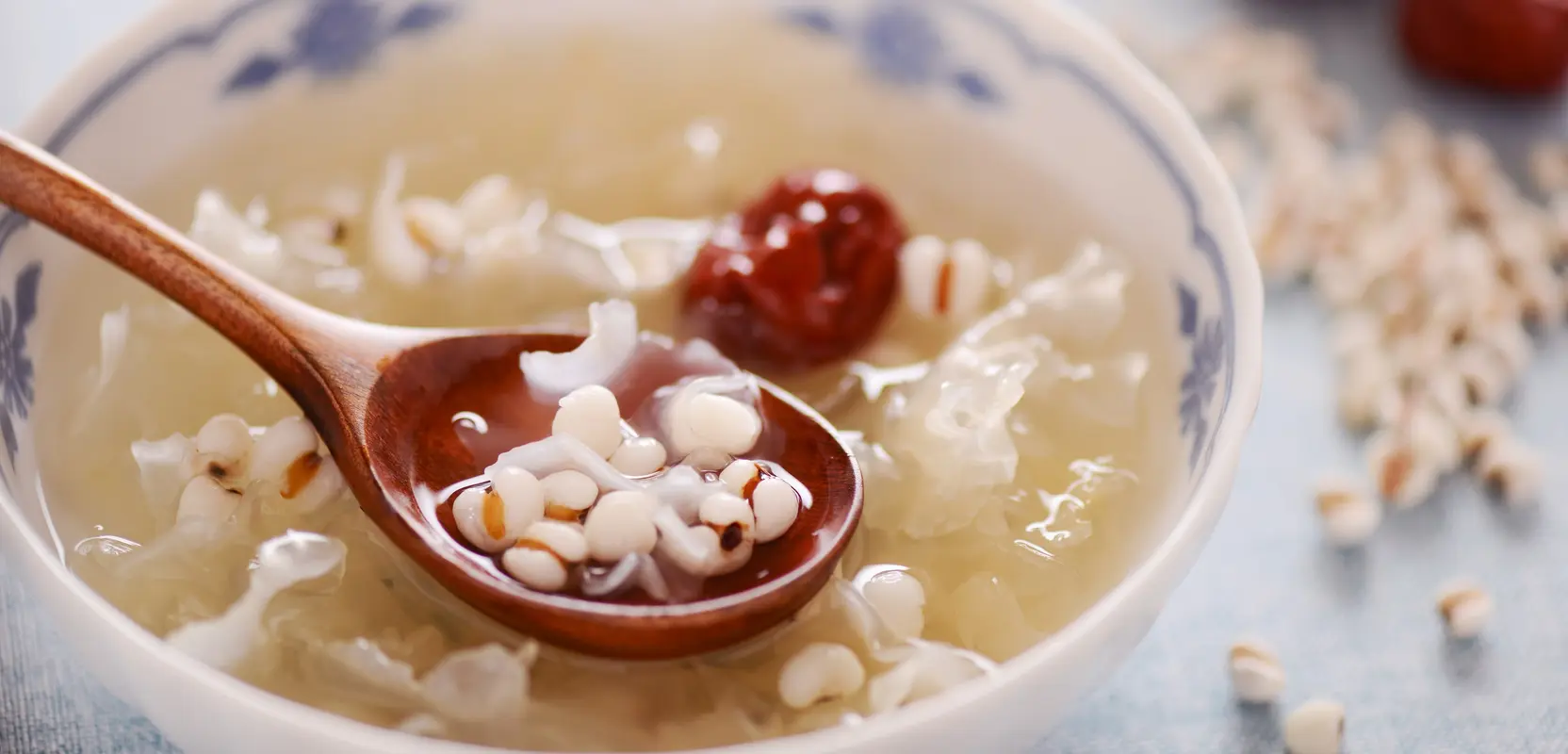
Traditional Chinese dietetics is a system of eating based on Chinese philosophy. The diet should be simple, varied, and should not create phlegm. Regularity and calm during meals are also important.
The creation of a menu is adapted to one's constitution, age, gender, season, the place where we were born, and the condition we are currently in.
Some of you may certainly object that Asia lies on the other side of the globe and we cannot transfer these customs to Central Europe. I would like to point out that the Middle Kingdom lies at the same latitude and longitude, just on the other side of the globe. Moreover, we are not transferring crops from China—those came to us in Europe from Asia much earlier—but a philosophy that expands our knowledge of the character of food, which is not subject to fashion but is firmly rooted in the entire system—in the doctrine of the five elements and the cycle of the world of which we are a part.
While in Europe we measure all food by calories and determine whether it contains proteins, fats, or sugars, Chinese dietetics distinguishes food by taste, nature, affiliation (tropism) to individual organs, and the method of food preparation. These properties then significantly influence their way of eating. This method of classifying food is thus much better able to adapt individual types of food to current needs—a person's age, the seasons, or a particular illness.
The old Chinese masters, in fact, began treatment for illness by adjusting the diet and preferring certain foods that were intended to influence the imbalance. Only when the results were not satisfactory did they resort to herbal treatment or acupuncture.
Taste belongs to the basic organs (Kidneys, Lungs, Spleen, Liver, Heart) in our body and supports their activity. But if the diet is not balanced, an excess of food with one particular taste can disrupt the harmonious cycle of energy in our body.
Sour taste pulls inwards and downwards and belongs to the Liver and Gallbladder. This taste of food is used for excessive sweating, discharge, organ prolapse, and diarrhoea (for example: vinegar, parsley, couscous, spelt, legume sprouts, hibiscus tea, rosehip tea, lemon balm tea, champagne).
Bitter taste directs inwards and downwards, dries, cools, lowers blood pressure, fever, and alleviates stomach acidity. This taste belongs to the Heart and Small Intestine (for example: celery tops, hops, dandelions, Brussels sprouts, rye, lettuce, wormwood).
Sweet taste has an upward direction, relaxes, nourishes, and belongs to the Spleen, Pancreas, and Stomach. Foods with a sweet taste satiate and provide energy, which are mainly cereals and then so-called empty foods, which only boost us for a moment but do not provide us with any energy, such as white sugar and products containing it.
Pungent taste moves and directs energy outwards, opens pores, helps with sweating, for example at the onset of a cold, stimulates digestion, and lightens. It belongs to the Lungs and the Large Intestine (for example: ginger, cayenne pepper, garlic, leek, horseradish, raw onion, goose, turkey, peppermint tea, radish, white radish).
Salty taste directs downwards, acts as a laxative, softens, and belongs to the Kidneys and Urinary Bladder (for example: parmesan, plaice, tuna, adzuki beans, peas, pork, miso, mung beans, olives).
Individual tastes are also able to influence other organs within the five elements. So:
An excess of food with a pungent taste (metal element – Lungs) can damage the function of the Liver (women in general should not use pungent foods, nor should people who have problems with tendons, athletes, and irritable individuals).
An excess of salty taste (water element – Kidneys) retains water and thereby damages the function of the Heart (people with cardiovascular diseases should avoid foods with a salty taste).
An excess of sour taste (wood element – Liver) can damage the functions of the Spleen.
An excess of bitter taste (fire element – Heart) can damage the Lungs (asthmatics, people with frequent lower respiratory tract infections, and COPD should avoid foods with a bitter taste so as not to weaken their Lungs even further).
An excess of sweet taste (earth element – Spleen) can disrupt the function of the Kidneys and upset the acid-base balance in the body.
Chinese dietetics divides food into five temperature categories. We have foods that are: cold, cool, neutral, warm, and hot. The nature of food is used in Chinese therapeutic dietetics so that individual organs are not damaged or to balance certain imbalances in the organism.
Chinese medicine treats with opposites. If the illness is hot, we use cold means, we cool the hot. And vice versa. If the illness is cold, we warm it. For example, if you suffer from a skin condition, which is often caused by heat in the organism, you should omit warm and hot foods. If you eat chilled, frozen, or cold food from the fridge with a weakened Spleen, or drink cold drinks or drinks with ice with your meal, you will injure your Spleen. The Spleen does not like cold food. Moreover, you will only digest such food partially; moisture begins to be retained in the body, which can be the basis for the development of many civilisation diseases.
If we are healthy, we should eat more or less neutrally.
The nature of food refers to its internal character. It has nothing to do with its preparation (although that is important, see below), but with the energy that was given to it thanks to its origin and growth. Eating should have a neutral character, and other natures should be adapted to the season. In winter, we can afford to have more food that warms, which is not only the choice of food type but also, for example, spices such as cinnamon or cloves. In contrast, in summer, we try to refresh ourselves with food and cool down in the heat, which is why we can afford tropical fruit and other foods that will help the body cope with high temperatures.
It is important to also think about minimising losses when preparing food. Plant-based foods should not come into contact with heavy metals, copper, and aluminium. Therefore, it is more advantageous to use heat-resistant glass or enamelled cookware for their preparation.
Wash vegetables and potatoes quickly and do not leave them soaking in water unnecessarily. You would lose alkaline substances such as potassium and sodium.
Do not scald leafy vegetables and herbs; you would destroy their structure—especially spinach and lettuce.
Vegetable broths are very valuable, as many nutritious substances remain right in them.
The preparation of food in therapeutic Chinese dietetics had a targeted meaning and was intentionally distinguished. Food preparation is divided into: hot, warm, neutral, cool, and cold (just like the nature of individual foods).
Hot food preparation is not suitable in warm months and for people who suffer from high blood pressure, heartburn, and eczema. These food preparations include:
Beware of grilling meat over an open fire, which is hot or warm by nature (e.g., chicken and pork).
Warm and neutral food preparation (balanced Yin and Yang, slightly weakened Yang) food preparation should occur in our diet most often. It is also suitable for various diets and for people who suffer from digestive disorders, etc. These food preparations include:
Cool food preparation is sprouting and raw food preparation (blending, juicing fruit and vegetables). The form of food preparation supports its digestibility, so the consumption of raw food should be very moderate and should be preferred more in the summer season in the afternoon hours. Drinking so-called smoothies in the morning is literally a shock to the digestive system and is definitely not suitable for most of us. It can cause cooling of the uterus and problems with conception, loose stools, gynaecological discharge, and painful menstruation.
Cold food preparation includes frozen food and food from the fridge, ice cream, drinks with ice. Freezing destroys the natural energy of food. Do not forget that our ancestors stored food most often by fermentation and drying. Freezing is a very young way of preserving food. Fridges began to be produced in 1913, and it took a very long time before they spread into households. We should heat-treat frozen food for at least 45 minutes, which is realistic for some types of meat, but it is definitely not suitable for vegetables or fruit.

Characteristics and effects of mushrooms according to traditional Chinese medicine

Description of herbal blends, effects according to Chinese medicine and main usage

Dietary recommendations including individual foods for specific patterns

Characteristics and effects of herbs according to traditional Chinese medicine

Characteristics of food and its influence on individual organs

Classification of herbs and mushrooms by individual diseases


Subscribe to our newsletter and you won't miss any promotions or important information