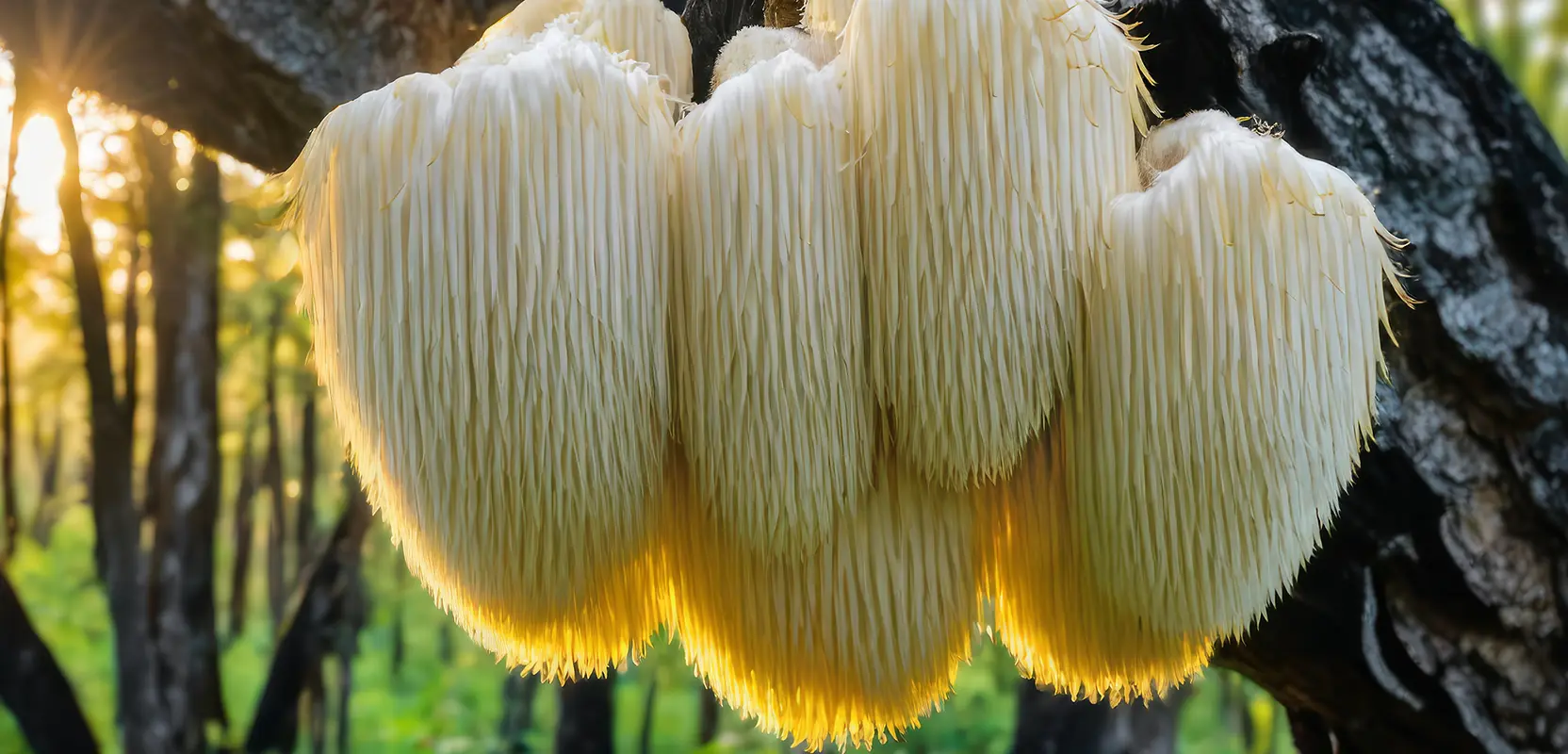



Perhaps it is time to take a closer look at Hericium (Lion’s Mane), also known as Lion’s Mane.
Hericium is among the most complex vital mushrooms used in both traditional and modern phytotherapy. It is valued primarily for its effects on the digestive tract, nervous system and immunity.
Active substances in Hericium
Hericium contains:
water-soluble polysaccharides, which participate in immune regulation and exhibit anti-tumour potential
phytosterols – erinacines (e.g., erinacin H), intensively studied for their ability to stimulate nerve growth factor (NGF)
erinacines J and K, which exhibit antibiotic activity
ergosterols, minerals and vitamins
How does Hericium work?
1) Digestive tract
Hericium protects and regenerates the mucous membranes of the stomach and intestines.
It helps with:
gastritis
gastric and duodenal ulcers
heartburn
nausea
At the same time, it supports overall high-quality and balanced digestion.
2) Nervous system
One of the most significant effects of Hericium is the support of nervous tissue.
It positively influences:
memory disorders
dementia
Alzheimer’s and Parkinson’s disease
multiple sclerosis
neuropathies and neurasthenia
3) Immunity and oncological prevention
Like other medicinal mushrooms, Hericium acts immunoregulatory and anti-tumour, especially in the area of:
the upper and middle parts of the digestive tract
the liver

Characteristics and effects of mushrooms according to traditional Chinese medicine

Description of herbal blends, effects according to Chinese medicine and main usage

Dietary recommendations including individual foods for specific patterns

Characteristics and effects of herbs according to traditional Chinese medicine

Characteristics of food and its influence on individual organs

Classification of herbs and mushrooms by individual diseases

Subscribe to our newsletter and you won't miss any promotions or important information