

Please note that the information provided below is the personal opinion of Mr Milan Schirlo, who is a therapist and an advocate of traditional Chinese medicine and a healthy lifestyle. Mr Schirlo does not promote any specific products or manufacturers of food supplements. Furthermore, this article is not connected to the sale of any products. The information is provided for the purpose of disseminating publicly available knowledge, conclusions of professional studies, education, and personal findings regarding vital mushrooms and a healthy lifestyle.
For legislative reasons, I cannot provide some information. Therefore, the text is missing for some points. I am working on republishing it. Thank you for your understanding.
Latin: Polyporus umbellatus (Grifola umbellata)
Czech: choroš oříš
Chinese: Zhu Ling (pig droppings)
Japanese: Chorei
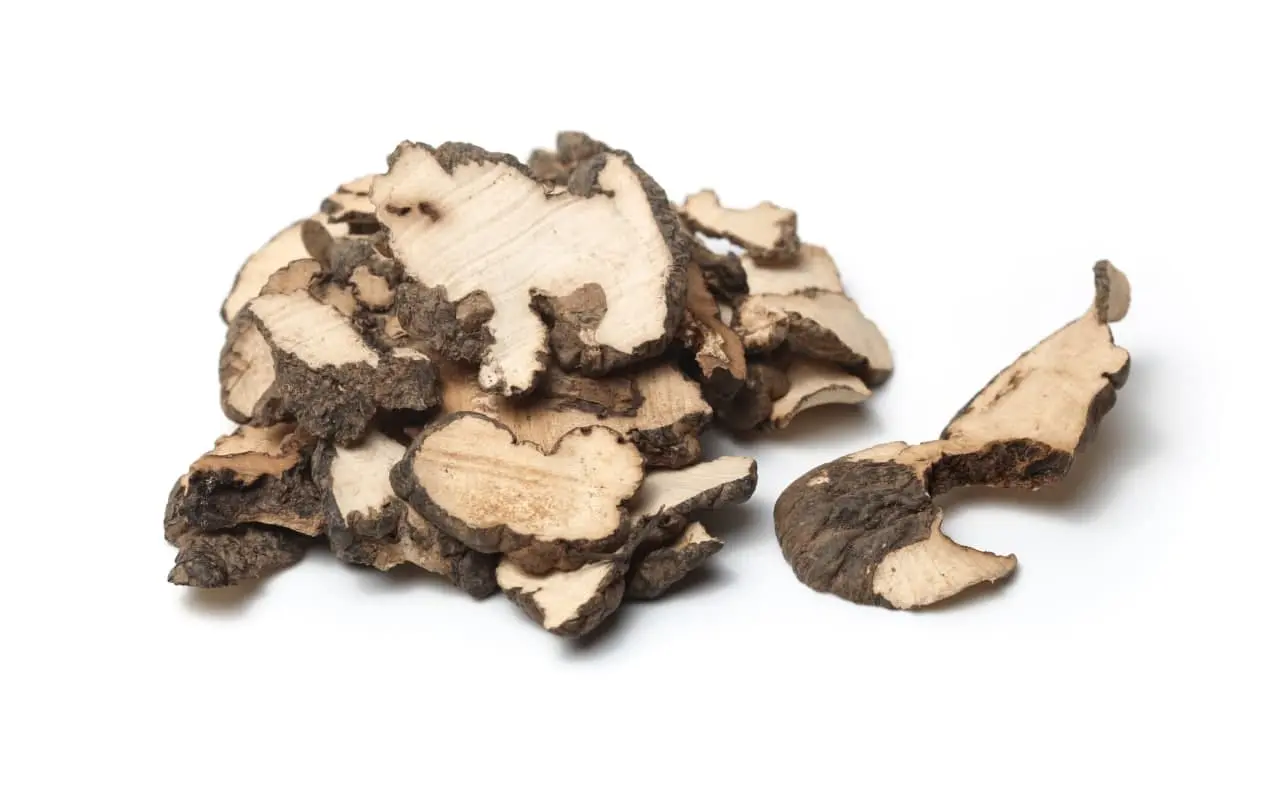
Polyporus umbellatus (Grifola umbellata, Zhu Ling, choroš oříš) is a wood-decaying polypore mushroom. We can find it at the base of trees, mainly deciduous ones. It also grows on fallen branches or stumps. It prefers hornbeams, oaks, and beeches. The fruiting body is formed by a short stalk, which is attached to the wood, from which "legs" extend, on which small caps pressed into the interior are formed, thus creating a fruiting body that has the appearance of a cluster. The fruiting body can thus have a diameter of over 50 cm. Polyporus prefers a temperate and cooler climate. We can find it in North America, Europe, and Asia. Polyporus also grows in our country. We can find it in the Elbe region, South Bohemia, and Moravia. However, it must be noted that it is already rare in the wild. However, the mushroom is very popular, so it is grown commercially. Interestingly, the wild-growing mushroom is often attacked by the fungus Armillariella mellea; although their relationship seemed parasitic, it turned out that Armillariella supports the growth of Polyporus. There is therefore also a parasitic relationship. The mycelium of Armillariella grows into the mycelium of Polyporus and takes nutrients from it for its growth into the fruiting body. The fruiting body of Armillariella is used by Polyporus as a source of nutrients.
Polyporus has been known since before our era. Its use is described in the herbals of traditional Chinese medicine from the Han dynasty period, e.g., Shen Nong Ben Cao Jing, Zhong Hua Ben Cao, Ben Cao Gang Mu. In them, the use of Polyporus as a diuretic is described, i.e., for removing oedema and draining.
Polyporus was described in the scientific system in 1801. At that time, the naturalist Ch. H. Persoon named it Bolletus umbellatus. In 1821, Polyporus was moved among the polypores by the Swedish mycologist E. M. Fries.
The ice mummy Ötzi had with him the birch polypore mushroom, which is closely related to the choroš oříš – allegedly so that he could protect himself against infections.
In its effect, it is similar to the mushroom Fu Ling (Poria cocos), but it does not have its replenishing effects, but it is stronger in draining dampness.
Nature (Si Qi): slightly cool, neutral
Taste (Wu Wei): slightly sweet, slightly bitter, bland (helps to drain pathological dampness through urination)
Tropism (Gui Jing): spleen, kidneys, urinary bladder
1, Diuretic effects, oedema
2, Yeast infections and chlamydia
3, Support for cancer
4, Inflammation of the urogenital tract
5, Skin problems
6, Hair growth
7, Harmonises blood pressure
8, Support of the immune system
a, Mushrooms in the form of extracts (recommended form of use)
If you are taking mushrooms in the form of 30% extracts, I recommend:
Preventive use
For milder health problems
For more serious health problems
b, Mushrooms in tincture
c, Mushrooms in the form of powder (powder, biomass)
d, Dried mushrooms
Polyporus is very rich in bioactive substances that affect health.
Like every mushroom, Polyporus also contains a large amount of sugars. Both simple and complex ones. Among the simple ones is mannitol, which is also used in classical medicine because it has diuretic effects and can reduce oedema and lower blood and intracranial pressure.
Polysaccharides are also important, which take the form of coarse, water-insoluble, and non-absorbable fibre. This is used by intestinal bacteria for their growth. Furthermore, there are absorbable polysaccharides, i.e., beta-glucans. Polyporus contains beta-glucans that branch at 3 positions, namely (1→3), (1→4), and (1→6). Glucans mainly have immunity-boosting effects. In addition, they act anti-tumour and antioxidant.
Steroid compounds are derived from the cholesterol nucleus. In mushrooms, we refer to them as mycosterols, and Polyporus contains a truly large amount of them; so far, more than 20 mycosterols have been described:
The effects of Polyporus are given by its composition, and it is very varied, and so are its effects, which we will briefly describe in the following text.
While with other mushrooms we mostly started with a description of immunomodulatory functions, with Polyporus we will start with its effect on the urinary system. In this regard, Polyporus is unique. In studies, and also from the experience of the ancient Chinese, it has been confirmed that Polyporus increases diuresis, i.e., the production and excretion of urine. This is important when fluid accumulates in the body, oedema forms, blood pressure increases, etc. Polyporus acts by supporting the excretion of sodium by the kidneys. When this element gets into the urine, it literally pulls water molecules with it. The increase in sodium excretion is due to the fact that Polyporus suppresses the activity of the adrenal hormone aldosterone. Its activity ensures the retention of fluids in the organism by ensuring the reabsorption of sodium from primary urine back into the circulation.
Mannitol, ergostanes, and ergosterols also participate in urine excretion.
In an experiment on dogs, it was possible to confirm that Polyporus increases the excretion of urine and sodium. The dogs received 0.25 to 0.5 mg/kg of the dog's weight. In experiments on rats, ergone was administered, which increased urine excretion by up to 60%.
Polyporus also participates in the regeneration of damaged kidneys and protects them from further damage. This is because increasing urine excretion reduces the risk of infections. Pathogens are more easily flushed out of the urinary tract. Polyporus also limits the formation of kidney stones. These often traumatise the kidney and urinary tract. There is also a risk that a kidney stone will get stuck in the urinary tract and block the outflow of urine. Polyporus limits the crystallisation of calcium and oxalate, i.e., the substances from which kidney stones are most often formed.
The protective and regenerative effect of Polyporus was demonstrated in a model of diabetic kidney damage. These are damaged by higher sugar values and also due to vascular damage. The kidneys are a highly vascularised organ. During the long-term persistence of increased sugar values, there is a decrease in kidney function and fibrosis, where functional tissue is replaced by connective tissue. Polyporus can effectively prevent this process and thus preserve functional tissue. It limits the deposition of collagen in the kidneys, inflammation, and cell death.
It was also possible to prove that Polyporus improves kidney function. Rats with kidney failure were fed Polyporus, which led to an improvement in kidney function, an increase in glomerular filtration, an increase in the excretion of creatinine and urea from the body in urine. Conversely, protein losses were limited. In the case of kidney damage, more protein penetrates into the urine.
The kidneys are also protected by the fact that Polyporus reduces inflammation and oxidative stress.
Cancer diseases are still fatal despite progress in treatment and diagnosis. Especially some types, e.g., pancreatic cancer. Cancer treatment is very burdensome and has many side effects. New substances are being sought that would be effective and at the same time gentle for the patient.
Polyporus can help with cancer through multiple mechanisms. It is necessary to mention that it can also be a prevention of cancer, thanks to the fact that it reduces oxidative stress and increases the activity of anti-tumour immunity.
The effects of Polyporus were tested on some types of cancer, or rather on the cells of these types. Tumour cells were cultured so that they thrived, then Polyporus or one of its components was added to them, and it was observed how the behaviour of the cells changed. Under the influence of Polyporus, the cells stopped multiplying and many succumbed to apoptosis, i.e., cell death. This effect was confirmed, e.g., in leukaemia cells, breast cancer, cervical cancer, stomach cancer, colon cancer, sarcoma, or liver cancer. In leukaemia cells, it reduces cell viability by up to 45%.
Anti-tumour effects were also confirmed in experiments on animals. Studies were conducted on mice or rats that were exposed to the action of carcinogenic substances. It was enough to administer mg/kg of the animal's weight of Polyporus, and carcinogenesis, i.e., tumour formation, was significantly reduced. In other studies, when the animal already has a tumour, it was confirmed that Polyporus stops the further growth of the tumour and can even shrink it. It also limits metastasis.
We will also mention a study with volunteers. It was a study with patients with urinary bladder cancer who had undergone anti-tumour treatment. Some patients were administered Polyporus and some the drug mitomycin C. The patients were further monitored, i.e., they went for check-ups. In patients who took Polyporus, recurrence, i.e., the reappearance of the tumour, did not occur as often. In patients with Polyporus, recurrence occurred in 35% of patients; in patients with mitomycin, recurrence was 53%. Polyporus was therefore more effective in preventing the reappearance of cancer than mitomycin.
It is also important that if Polyporus is added to anti-tumour therapy, i.e., to radio- or chemotherapy, it can increase its effectiveness and also mitigate the side effects associated with the treatment. It mitigates oxidative stress and limits the suppression of the immune system.
Tan XL, Guo L, Wang GH. Polyporus umbellatus inhibited tumor cell proliferation and promoted tumor cell apoptosis by down-regulating AKT in breast cancer. Biomed Pharmacother. 2016 Jul 19;83:526-535.
Fries. Li X, Xu W. TLR4-mediated activation of macrophages by the polysaccharide fraction from Polyporus umbellatus(pers.) J Ethnopharmacol. 2010 Epub.
Li X, Xu W, Chen. Polysaccharide purified from Polyporus umbellatus (Per) Fr induces the activation and maturation of murine bone-derived dendritic cells via toll-like receptor 4. J. Cell Immunol. 2010;265(1):50-6.
Yang D, Li S, Wang H, Li X, Liu S, Han W, Hao J, Zhang H. Prevention of postoperative recurrence of bladder cancer: a clinical study. Zhonghua Wai Ke Za Zhi. 1999;37(8):464-5.
Zhang G, Zeng X, Li C, Li J, Huang Y, Han L, Wei JA, Huang H. Inhibition of urinary bladder carcinogenesis by aqueous extract of sclerotia of Polyporus umbellatus fries and polyporus polysaccharide. Am J Chin Med. 2011;39(1):135-44.
Lee, J.W. Shin, Y.J.Cho, D.J.;Lim, H.J.;Lee, Y.K. Choi, W.E. Antitumor and Antimutagenic Effect of the Proteinpolysaccharides from Polyporus umbellatus
Zhao YY, Shen X, Chao X, Ho CC, Cheng XL, Zhang Y, Lin RC, Du KJ, Luo WJ, Chen JY, Sun WJ. Ergosta-4,6,8(14),22-tetraen-3-one induces G2/M cell cycle arrest and apoptosis in human hepatocellular carcinoma HepG2 cells. Biochim Biophys Acta. 2011;1810(4):384-90.
The proper functioning of the immune system is absolutely essential for our health. The immune system is supposed to protect us from danger, pathogens, tumour cells, but not to damage, not even during our protection. This happens occasionally. Its reaction to a stimulus is stronger and longer than it needs to be. It can also react to harmless stimuli, such as allergens, or its own proteins, i.e., autoimmunity.
Polyporus and the substances contained in it, mainly polysaccharides, stimulate the immune system, its cells. When Polyporus is added to immune cells, e.g., macrophages, their activation, multiplication, and production of agents that activate other immune cells occur, e.g., interleukin 1beta, interleukin 6 and 23, interferon gamma, TNF alpha. Macrophages are also stronger in engulfing foreign or damaging material. If they engulf bacteria or viral particles, they destroy them more effectively, process them, and display their antigens on their surface so that other immune cells, mainly T lymphocytes, can recognise them there. These then have the ability to activate B lymphocytes, which produce antibodies.
Besides the immunostimulatory effect, Polyporus has the ability to suppress the undesirable inflammatory reaction of the immune system. In this regard, polyporoids are very effective. Experiments on mice showed that they can reduce allergic manifestations. Mice were sensitised to ovalbumin (egg white), which was repeatedly administered to them so that an allergic reaction was created and IgE antibodies were formed. If polyporoids were administered, a reduction in the intensity of the reaction and allergic inflammation and IgE occurred.
Inflammation can also be caused by the administration of toxic substances; this is a so-called sterile inflammation. Polyporus can also reduce this, mainly through polyporoids and polyposrusterones. Suppression of inflammation reduces tissue damage.
Dai H, Han XQ, Gong FY, Dong H, Tu PF, Gao XM. Structure elucidation and immunological function analysis of a novel β-glucan from the fruit bodies of Polyporus umbellatus (Pers.) Fries. Glycobiology. 2012 Dec;22(12):1673-83.
Li X, Xu W, Chen J. Polysaccharide purified from Polyporus umbellatus (Per) Fr induces the activation and maturation of murine bone-derived dendritic cells via toll-like receptor 4. Cell Immunol. 2010;265(1):50-6.
Li X, Xu W. TLR4-mediated activation of macrophages by the polysaccharide fraction from Polyporus umbellatus(pers.) Fries. J Ethnopharmacol. 2011;135(1):1-6.
Liu CP, Li X, Lai GN, Li JH, Jia WY, Cao YY, Xu WX, Tan QL, Zhou CY, Luo M, Zhang XY, Yuan DQ, Tian JY, Zhang X, Zeng X. Mechanisms of Macrophage Immunomodulatory Activity Induced by a New Polysaccharide Isolated From Polyporus umbellatus (Pers.) Fries. Front Chem. 2020 Jul 22;8:581. doi: 10.3389/fchem.2020.00581.
Sun Y, Yasukawa K. New anti-inflammatory ergostane-type ecdysteroids from the sclerotium of Polyporus umbellatus. Bioorg Med Chem Lett. 2008;18(11):3417-20.
Babakhin AA, Majoul LA, Vedernikov AA, Leskov VP, Pisarev VM, Babakhin AA, Logina NYu, Gushchin IS, Nolte H, DuBuske LM. In vivo and in vitro immunomodulation induced by the extract of the mycelium fungus Polyporus squamosus. Allergy Asthma Proc. 1997;18(5):301-10.
Microorganisms that are capable of causing diseases, or even killing us, are everywhere around us. Whether we get sick often depends only on the ability of the immune system to kill pathogens before they cause disease. If the disease breaks out, we must give the immune system time; it usually handles it itself. In the case of viral infections, it must, since only a few viral infections are truly treatable. In the case of bacterial infections, antibiotics help, for fungal ones antimycotics, and for parasitic ones antiparasitics. But pathogens are becoming more resistant and do not respond to drugs. New possibilities are therefore being sought for how to treat and cure infections.
Polyporus both stimulates the immune system, including anti-infectious immunity, and contains substances that kill microorganisms directly.
Polyporus proved to be very effective in the case of the hepatitis B virus. There are clinical studies with patients with hepatitis B. In one, there were 90 patients who had suffered from hepatitis B for a long time. The virus was still multiplying in the liver and damaging the liver. This was also manifested by the fact that the values of liver enzymes in the blood increased, i.e., ALT, AST. If the patients received Polyporus, the values of liver enzymes in the blood decreased. This means that the liver was less damaged. After 3 months of use, there were even visible signs of improvement in the state of the liver, in some patients by up to 60%. The multiplication of the virus also decreased, by about 25%. Interestingly, the addition of red-rooted sage increased the effectiveness of Polyporus; the liver improved by more than 80% and the multiplication of the virus decreased by almost 70%.
An article was recently published that summarises available studies containing the results of studies of treating patients with hepatitis B with Polyporus. In total, there were 11,703 patients in the studies, and polyporus polysaccharides were used with other drugs, e.g., interferon, acyclovir... Polysaccharides alone or in combination always led to an improvement in the patient's condition.
Polyporus can also kill many bacteria, e.g., Staphylococcus aureus or Escherichia coli.
Xiong LL. Therapeutic effect of combined therapy of Salvia miltiorrhizae and Polyporus umbellatus polysaccharide in the treatment of chronic hepatitis B. Zhongguo Zhong Xi Yi Jie He Za Zhi. 1993;13(9):533-5, 516-7.
KeGuo Z, Zang Y, Zhang L. The efficacy of Polyporus Umbellatus polysaccharide in treating hepatitis B in China. Prog Mol Biol Transl Sci. 2019;163:329-360. doi: 10.1016/bs.pmbts.2019.03.012..
Liu J, McIntosh H, Lin H. Chinese medicinal herbs for chronic hepatitis B: a systematic review. Liver. 2001;21(4):280-6.
Ye Sun,Xiaoyan Zhou. Purification, initial characterization and immune activities of polysaccharides from the fungus, Polyporus umbellatus. Food Science and Human Wellness Volume 3, Issue 2, June 2014, Pages 73–78.
Polyporus is able to protect the liver from damage and support its regeneration. This is because it reduces inflammation, oxidative stress, and also fights infections affecting the liver. In experiments on rats that were administered carbon tetrachloride, it was confirmed that Polyporus acts hepatoprotectively. Carbon tetrachloride significantly damaged the liver; however, if the rats received Polyporus for 9 weeks, the damage was smaller and the state of the liver improved. Functions normalised, there was no fibrosis present, etc.
Polyporus also protects liver tissue, not just the kidneys. The liver is also burdened by toxins, harmful substances, infections, etc. They can regenerate, but they can also be damaged. Their function is indispensable for the body; they detoxify, participate in the metabolism of nutrients, and also in the synthesis of many proteins, including clotting factors. If the liver is damaged, fibrosis occurs, where functional tissue is replaced by connective tissue, then further tissue remodelling, i.e., cirrhosis. This state ends in liver failure. Experiments on rats confirmed that Polyporus protects the liver. Scientists gave the rats carbon tetrachloride, which caused liver fibrosis. For 9 weeks, they were administered Polyporus and the state of the liver significantly improved. Normalisation of liver tests occurred, i.e., the values of liver enzymes in the blood decreased, and also during histological examination of the liver tissue sample, it was found that fibrosis and its extent were reduced, there were also fewer collagen deposits, etc.
Another similar study was also conducted on mice, with the same results as the first mentioned study.
Kang Peng, Lv ShuLan, Wang Xiao, Yan, Sun Li Jie, Yu Jian Wu, Zhao Yong Hua, Li Shu Chen. Polyporus umbellatus polysaccharides ameliorates carbon tetrachloride-induced hepatic injury in mice. African Journal of Pharmacy and Pharmacology Vol. 6(37), pp. 2686-2691,8.
Zou YH, Yang Y, Li J, Wu Q, Li WP, Lu JT, Roberts MS. Potential therapeutic effects of a traditional Chinese formulation, BJ-JN, on liver fibrosis induced by carbon tetrachloride in rats. J Ethnopharmacol. 2008;120(3):452-7.
Oxidative stress is caused by increased production of free radicals. Production exceeds the organism's ability to neutralise these compounds. They then react with other molecules, e.g., fats in cell membranes, DNA in cell nuclei. This has a very negative effect on the cell; it can even kill it, cause mutations, etc. There is an acceleration of degenerative processes, chronic inflammation, and the risk of cancer diseases increases. It is therefore important to reduce oxidative stress. The antioxidant effects of Polyporus were tested in solutions with free radicals. Their concentration was known before the addition of Polyporus and afterwards. Polyporus reduced their concentration.
Antioxidant protective effects were also confirmed on cells. Red blood cells were placed in a medium with oxygen radicals. These lead to damage and death of red blood cells. However, if Polyporus was also added to the medium, a larger amount of red blood cells survived.
Polyporus was also tested on rats, where it was found that the administration of Polyporus reduces oxidative stress and damage to red blood cells and cell membranes.
He PF, Zhang AQ, Wang XL, Qu L, Li GL, Li YP, Sun PL. Structure elucidation and antioxidant activity of a novel polysaccharide from Polyporus umbellatus sclerotia. Int J Biol Macromol. 2015 Oct 14. pii: S0141-8130(15)30036-2.
Sekiya N, Hikiami H, Nakai Y, Sakakibara I, Nozaki K, Kouta K, Shimada Y, Terasawa K. Inhibitory effects of triterpenes isolated from Chuling (Polyporus umbellatus Fries) on free radical-induced lysis of red blood cells. Biol Pharm Bull. 2005 May;28(5):817-21.
Fats are indispensable for the organism. They form, e.g., cell membranes and various signalling molecules. However, if there is an excess of fats, it leads to various diseases. Fats are stored not only in adipose tissue but also in the walls of blood vessels, liver, muscles, etc. This then results in the development of cardiovascular diseases and hepatosteatosis. Polyporus can help lower fat levels. The hypolipidaemic effects of Polyporus were confirmed in a study with rats that had higher fat values in the blood. In rats that received Polyporus, a decrease in triglycerides occurred, by up to 77.9%, total cholesterol dropped by about 20%, and conversely, the value of "good" HDL cholesterol increased. Polyporus was even compared with commonly used hypolipidaemics, fibrates, and its effects were better in the study.
Chengyuan Lianga, Gennian Maoa, Zhiqiang Liub, Xuechuan Wangc. The hypolipidemic properties study of total triterpenic acids from Polyporus umbellatus. Journal of Chemical and Pharmaceutical Research, 2015, 7(4):85-92
http://www.jocpr.com/articles/the-hypolipidemic-properties-study-of-total-triterpenic-acids-frompolyporus-umbellatus.pdf
Hair is important for both women and men. Its loss can be traumatic. Polyporus can stimulate hair growth. The experiment took place on mice. Scientists removed the hair from their backs, completely bald. And on the bald spots, they applied a solution with an extract from Polyporus. The bald spots that were rubbed with Polyporus grew hair sooner. Scientists attributed this effect to acetosyringones and polyporusterones A and B.
Inaoka Y, Shakuya A, Fukazawa H, Ishida H, Nukaya H, Tsuji K, Kuroda H, Okada M, Fukushima M, Kosuge T. Studies on active substances in herbs used for hair treatment. I - IV. Effects of herb extracts on hair growth and isolation of an active substance from Polyporus umbellatus F. Chem Pharm Bull (Tokyo). 1994;42(3):530-3.

Characteristics and effects of mushrooms according to traditional Chinese medicine

Description of herbal blends, effects according to Chinese medicine and main usage

Dietary recommendations including individual foods for specific patterns

Characteristics and effects of herbs according to traditional Chinese medicine

Characteristics of food and its influence on individual organs

Classification of herbs and mushrooms by individual diseases


Subscribe to our newsletter and you won't miss any promotions or important information