


Most of you probably know that the spleen is a relatively small organ in the left hypochondrium that functions as part of the immune system. It is where worn-out red blood cells are broken down and white blood cells and antibodies are produced. While this is very interesting, we will not be talking much about the Spleen as an organ according to Western medicine today. We will be talking about the Spleen and its influence on our immune system as understood by Chinese medicine.
To begin with, I must mention that traditional Chinese medicine divides our world into five systems, or five elements. These are: wood, fire, earth, metal and water. Every thing and every phenomenon is classified under one of these elements based on its properties, and similarly, in our body, each element is governed by one organ. Wood is governed by the Liver, fire by the Heart, earth by the Spleen, metal by the Lungs and water by the Kidneys. And the given element in the body is commonly named after its governing organ. So, if a Chinese doctor speaks of the Liver, they usually do not mean just the chemical factory that each of us carries in our right hypochondrium, but they are speaking of the entire system, which, in addition to the liver itself, also includes the gallbladder, eyes, hair, nails or the emotion of anger. Likewise, in the case of the Spleen, Chinese medicine speaks of the stomach, muscles, mouth, and also thinking, intellect or rumination. So, for example, if we have a problem with flabby muscles, the Spleen will need to be strengthened.
This system of five elements is called Wu Xing, and a Chinese medicine doctor uses it both for diagnosis and subsequent treatment. The entire system must be in balance for our organism to function correctly. Unfortunately, this balance is very fragile. Everything is connected to everything else. An imbalance in one system quickly triggers an imbalance in another. And thanks to this, a therapist is able to determine not only how the illness originated, but also how it will develop.
In ancient China, there lived a physician named Li Dong Yuan. He understood that the Spleen system occupies an exceptional place in our organism and founded the Earth School. His teaching is based on the thesis that most problems stem from weak Spleen Qi energy. This means that by strengthening Spleen Qi, we are able to cure most health problems. When we strengthen Spleen Qi, the body can deal with other imbalances on its own.
The Spleen is an earthy element and behaves accordingly. It is the centre of our body, it is stability, it is something constant. It is extremely important for our state of health.
The key task of the Spleen is to transform food into Qi energy and blood. Qi and blood are very important for a person; they are the "fuel" for our organism. For a machine to function, it needs fuel. And our fuel is Qi and blood. Simply put, we can say that the Spleen is our "digestion" – it transforms food into Qi and blood. It is not the stomach, as one might think – that is just a "combustion chamber" where it happens, but the "driving force" for the whole transformation comes from the Spleen. In addition to food, the Spleen also transforms fluids. If our Spleen is strong enough, this transformation process will work well and our organism will be full of Qi and blood, i.e., it will have enough fuel to function and will thrive.
Another task of the Spleen is to lift everything up and keep it in its place. If this function is weakened, it leads, for example, to the prolapse of internal organs, chronic diarrhoea, excessive fatigue, etc.
Since the Spleen is synonymous with digestion, its condition will primarily be influenced by what we eat. Chinese medicine divides dietary approaches into those for the healthy and those for the sick. For the sick, the diet must balance imbalances in the organism, the imbalances of yin and yang. This means that if there is cold in the organism (which is Yin), we warm it up, and vice versa. If we have cold in the Spleen because we keep eating ice cream, the goal will be to warm the Spleen, for example with warm soups. Diet for the sick is very individual and depends on the constitution of the specific person and the nature of the illness. From this, it is clear that what helps one person may harm another. It must be emphasised that there is no holy grail in nutrition, even though everyone is looking for one (some claim they have discovered it, and that this particular food or food supplement will help absolutely everyone with absolutely all problems, but from the perspective of traditional Chinese medicine, that is simply not possible.
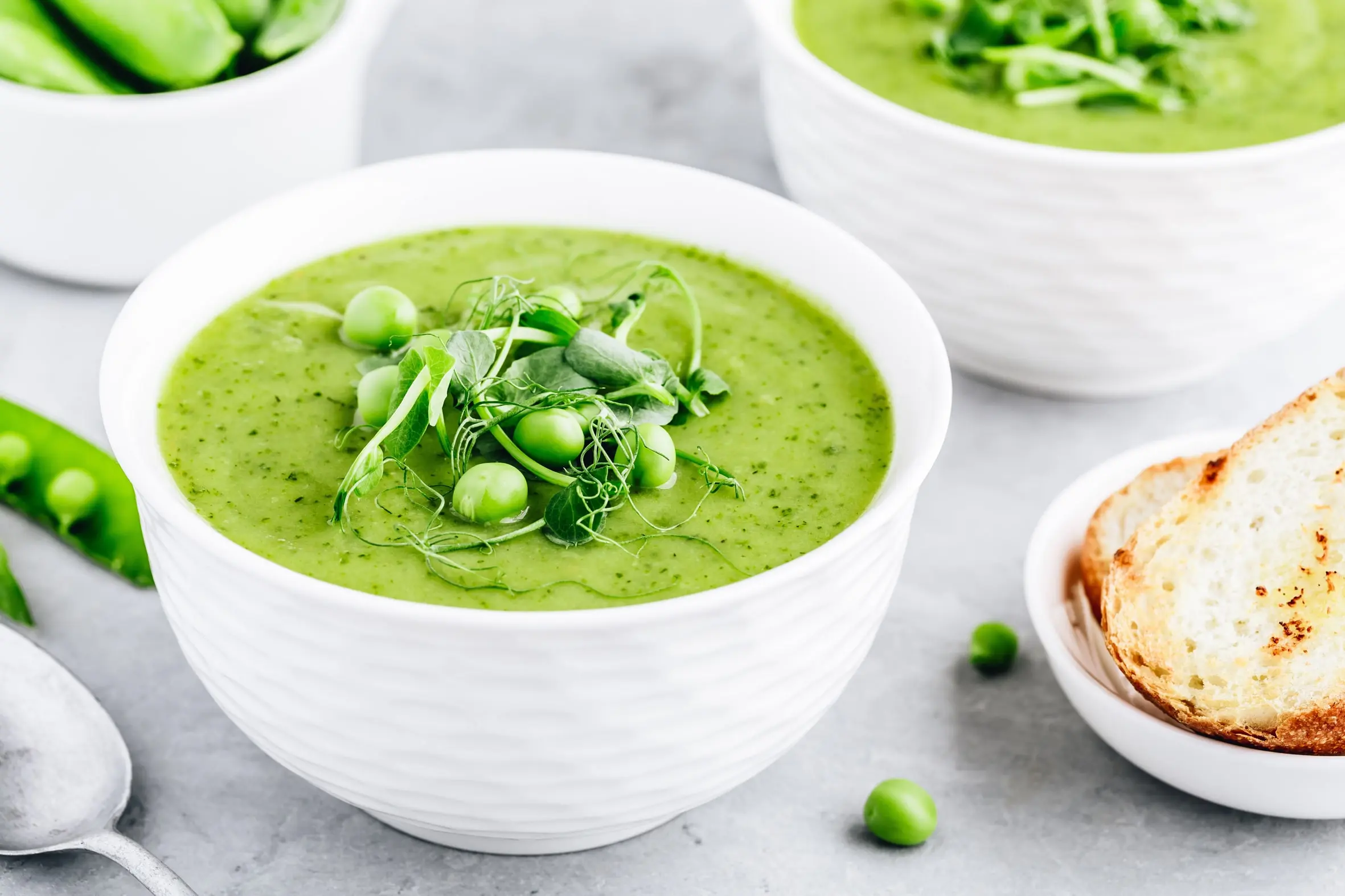
I will outline for you, in essence, a universal way of eating even for healthy people (or at least reasonably healthy ones).
Avoid everything that the Spleen dislikes and that weakens it:
1) It dislikes irregularity, not only in eating, but in life as a whole
We should wake up, eat, work, exercise, and go to sleep regularly (at the same times). The more regularity we bring to our lives, the happier the Spleen will be. The most important thing, of course, is regularity in eating. “It doesn't matter what you eat, as long as you eat it regularly.” Chinese doctors recommend eating 2-3 times a day. Eat and then leave enough time for the Spleen to digest and restore its Qi energy. Some contemporary approaches advise that if you want to lose weight, you should eat every 2 hours. This is partly true. Frequent food intake stimulates the metabolism and it starts burning faster. We could say that the Spleen intensifies its activity. The problem, however, is that due to such intense activity, its Qi is depleted even more. Sometimes after a week, sometimes after a few months. And then all it takes is a few bad days with “junk food” and you are at a higher weight than you were at the beginning. Simply the classic yo-yo effect.
My recommendation is to eat 2 or 3 times a day, always at the same time. And no snacking between these meals. Just drink water or weak tea in moderation. At the same time, everything must be adapted to the condition of the specific individual. A 40-kilogram woman with hypoglycaemia cannot eat only twice a day!!! From this point of view, even long-term fasting is not entirely optimal. Conversely, modern “intermittent fasting” can bring certain benefits to the body.
2) It dislikes overeating
It is essentially the same principle I described above. If we eat large portions of hearty meals, the Spleen needs a lot of Qi energy to process the excessive portions. This unnecessarily depletes its energy. It is ideal to eat until 80% full. After a meal, you should still feel a certain sense of slight hunger. But a really slight one. An excessive amount of food in combination with a weakened transformation function of the Spleen leads to another phenomenon related to being overweight. Food begins to stagnate. It simply moves too slowly. You probably know this as a “slow metabolism”. And just like compost in a garden starts to heat up, the slowed movement starts to create heat in our Stomach, and this creates a phenomenon we call “wolfish hunger”. We are simply always hungry. On one hand, we have a constant need to eat, and on the other hand, the weak Spleen is slowly transforming and moving the food. And that is not a good combination for someone who wants to lose weight.
3) It dislikes dampness
Dampness, especially cold dampness (e.g., in the form of ice cream), which exhausts it and contributes to the formation of further excess dampness. (This, for example, explains why bathing in cold water is a trigger for gynaecological discharge for some women). Typical examples of damp and cold foods are dairy products - milk, curd, yoghurts. And what about cold yoghurt taken out of the fridge in the morning! Butter and hard cheeses are not as problematic.
4) It dislikes sugar
And now, please, experts in Chinese medicine, hold off on your criticism and claims that “the Spleen actually loves sugar”. Yes, you are right, but my favourite principle of moderation applies to sugar as well. The Spleen needs sugar because it creates Qi energy from it. But not all sugar is the same. White refined sugar is called a “Qi thief”. This fast sugar sets the Spleen's activity in motion too much and at the same time exhausts it very quickly. You surely know this. When you are tired and exhausted, you would give anything for a piece of something sweet that will quickly give you energy. White sugar does this reliably. If you supply the Spleen with white sugar too much, you will overwhelm and exhaust it relatively quickly. And the Spleen will start producing the aforementioned pathological dampness, which will start to be stored in the form of fat.
It is actually a vicious circle; a weak Spleen produces little Qi and blood. We are tired, we feel that we quickly need fast energy. We have a distinct craving for something sweet. We have some chocolate. We feel great for a while, but after some time we are worse off than we were before. And so on and so forth. It is the same with white flour as it is with sugar. These are essentially fast sugars too, which ultimately weaken the Spleen. So, remember to provide the Spleen with “slow sugars” that are dosed gradually. Ideally, whole-grain bread or cereal porridges.
5) It dislikes sitting
It must move. With a sedentary job, the kilos go up very quickly. So I recommend movement - but again, moderate. Too intense movement depletes too much blood and Qi energy from the body, and a weak Spleen cannot manage to restore this state in a sufficiently short time. Ideal is brisk walking, Taiji, or yoga. In my practice, I have already had several top athletes who exhausted themselves too much during puberty, when there is a high consumption of Qi and blood for growth. They lost their menstruation and later could not get pregnant.
6) It dislikes excessive thinking
This also weakens it. If you have a problem and keep thinking about it, this also weakens the Spleen's Qi, and a weakened Spleen forces you to ruminate even more. Again, a vicious circle.
Follow a few rules that are beneficial for the Spleen:
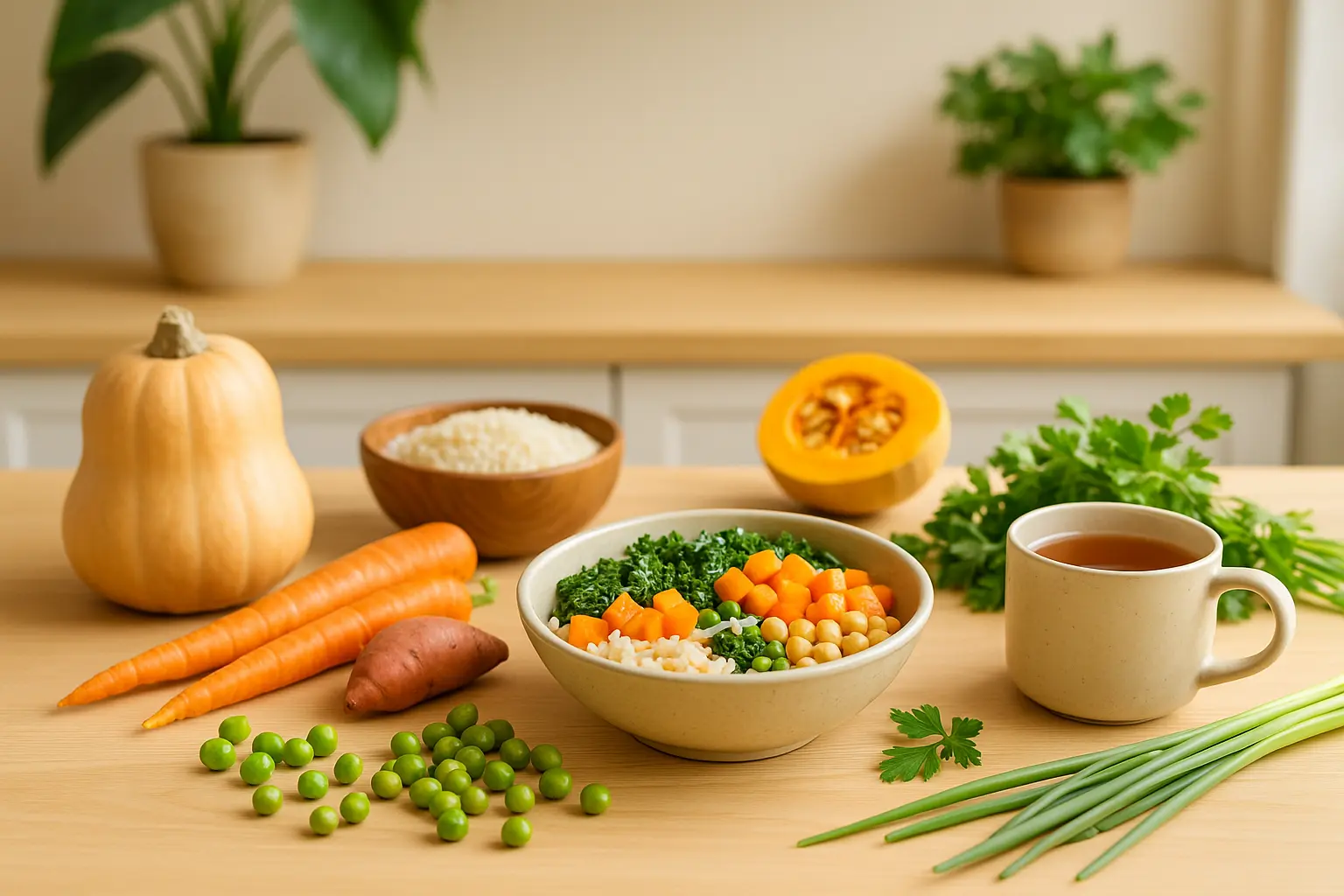
Adjust your diet to support the strengthening of Spleen Qi. Prefer tasty, simple meals that consist of a small number of ingredients. The basis should be complex carbohydrates supplemented with a small amount of high-value proteins and lightly cooked vegetables. To obtain the highest quality Qi energy, I recommend choosing fresh ingredients that will please not only the tongue but also the eye. Locally grown seasonal foods have the best Qi. Although every meal needs to be heat-treated, I do not recommend unnecessary overcooking. Depending on the type of food, light boiling is usually sufficient, after which the food remains a little crunchy. Leafy and tender vegetables only need to be lightly boiled, while root vegetables and grains retain their shape, structure, and Qi even after long, slow cooking.
1) Prefer beneficial foods:
2) Limit or avoid these foods:
3) Do not forget the principle of individuality!
It is good to keep in mind that there are general principles for strengthening the Spleen, but at the same time, we are each different and have imbalances in the body put together differently. One food can help one person and harm another. Therefore, use a simple rule. If you feel heavy, tired, sleepy, or suffer from bloating or diarrhoea after a meal, then it is not the right food for you. Perhaps only at this moment. In a year, it may change. Furthermore, it is necessary to prefer a different composition of food in summer and a different one in winter. A juicy cold watermelon refreshes perfectly in the summer heat, but you should forget about it in winter.
4) Watch the proportions of individual food components
Easily digestible carbohydrates contained, for example, in white rice, oats, and starchy root vegetables should form the main component of the diet (approx. 40-60%). The rest should consist of cooked green, red, and yellow vegetables (30-40%) and finally a small proportion (roughly 10-20%) of high-quality proteins. This is especially important at the beginning of treatment. Only when the Spleen begins to strengthen can other foods be added. However, in the case of an excess of dampness in the organism, it is necessary to carefully monitor the volume of carbohydrates consumed. If the Spleen has already strengthened or if we are in a hot climate, smaller amounts of leafy vegetables can also be added.
With Herbs
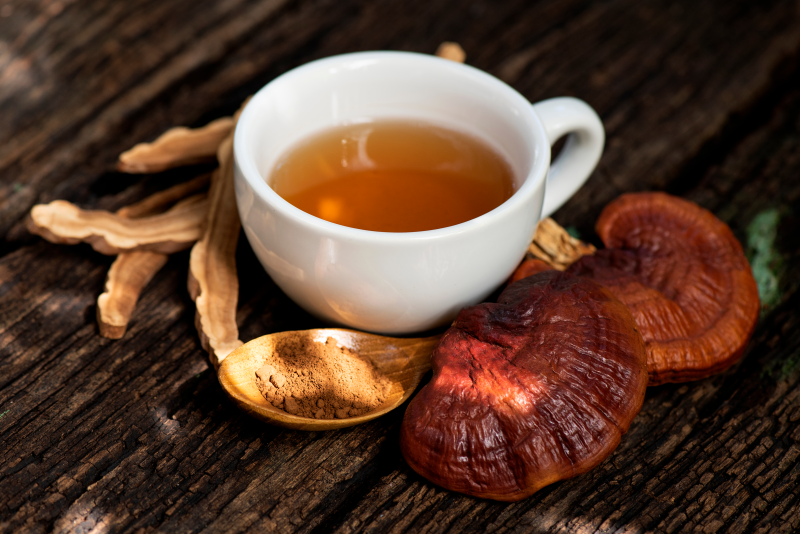
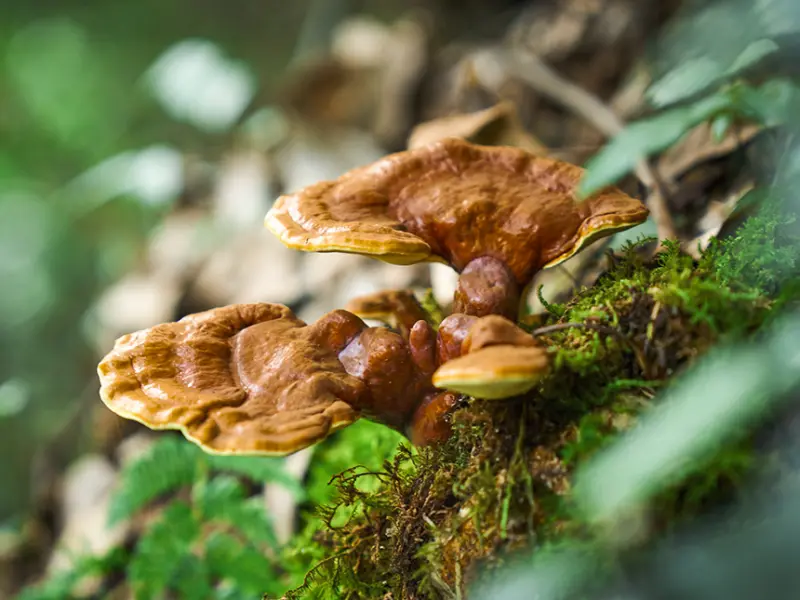
Chinese medicine says that herbs are just more concentrated foods. This means that a problem we might take a year to solve by changing our diet can be handled much faster with herbs. In Chinese medicine, herbs are used in combinations. A typical recipe contains five to fifteen different herbs. Let us now go through four of the most commonly used recipes.
1) Jian Pi Tang
This traditional mixture contains several groups of herbs. The first group strengthens the Spleen Qi, its energy and ability to digest food. This includes, for example, Atractylodes macrocephala or Codonopsis pilosula. The second group removes pathological dampness from the body, thereby also strengthening Spleen energy. This group includes, for example, the mushroom Poria cocos. Then there is a large group of herbs that directly support the digestive process. In this group, we include Crataegus pinnatifida, nutmeg, or tangerine peel. Coptis chinensis is also added to the mixture, its role being to gently cool the heat caused by food stagnation. We therefore use Jian Pi Tang for conditions such as bloating, loss of appetite, diarrhoea, slowed metabolism, or fatigue.
2) Mu Xiang Shun Qi Wan
The second mixture is a traditional recipe for releasing blockages in the digestive system. If Spleen Qi energy is weak, digestion begins to slow down and food starts to form blockages. This brings with it a whole range of problems. From bloating to belching, abdominal pain, heartburn, reflux, loss of appetite, or constipation. This recipe works excellently symptomatically if you overeat. It mainly contains herbs that get the digestive system and stagnant food moving: Aucklandia costus, Amomum villosum, Cyperus rotundus, tangerine peel, etc.
3) Bu Zhong Yi Qi Tang
The author of the Bu Zhong Yi Qi Tang recipe is the ancient Chinese physician Li Dong Yuan (1180-1251). It contains herbs that replenish Spleen Qi energy while simultaneously lifting it upwards. This decline manifests as various prolapses or sagging of organs. Or also as the easy formation of bruises. Thanks to its lifting function, this mixture is often used for fatigue states. Or for people suffering from low blood pressure. Furthermore, it is used for conditions such as muscle weakness or atrophy, loss of appetite, incontinence, varicose veins, chronic diarrhoea, weak menstruation, spotting, recurrent miscarriages, etc.
4) Gui Pi Wan
This exceptional and frequently used mixture contains two large groups of herbs. The first group of herbs, such as Ginseng or Astragalus membranaceus, strengthens Spleen Qi energy. The second group strengthens the Heart. And those who know Chinese medicine more closely know that the Shen soul resides in the Heart, which is essentially a synonym for our psyche. Therefore, this mixture is more about the mental state than about digestive problems. It is used for people who do a lot of mental work. It is therefore very popular with students during exam periods. It is also suitable for people who suffer from ruminating. They keep solving a problem over and over again. Which exhausts not only the Heart but also the Spleen.
So much for the Spleen system, which is the centrepiece of our own universe.

Subscribe to our newsletter and you won't miss any promotions or important information